
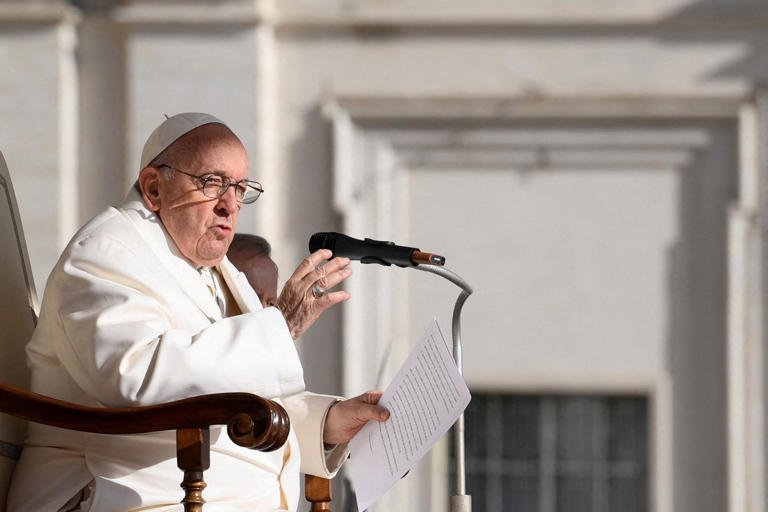
Pope Francis has died at the age of 88, the Vatican has confirmed. His death marks the end of a significant 12-year papacy that began in March 2013 following the unexpected resignation of Pope Benedict XVI.
Pope Francis had recently been discharged from Rome’s Gemelli Hospital, where he was admitted on February 14 due to breathing issues. It was later revealed that he had been suffering from a complex respiratory infection and double pneumonia—conditions that inflame the lungs and make breathing increasingly difficult. Despite his illness, Francis appeared publicly on Easter Sunday in St. Peter’s Square and held a meeting with U.S. Vice President JD Vance just a day before his passing.
Pope Francis was a figure of many firsts: the first Jesuit pope, the first from the Americas, the first from the Southern Hemisphere, and the first non-European pontiff in over a thousand years, since Pope Gregory III. His death sets into motion the traditional process of selecting a new pope, beginning with the papal funeral and culminating in the conclave, where cardinals will gather to elect his successor. The election will conclude with the familiar white smoke rising above the Sistine Chapel.
Born Jorge Mario Bergoglio on December 17, 1936, in Buenos Aires, Argentina, he was the son of Italian immigrants. Before entering religious life, Bergoglio had aspirations in science, training as an industrial chemist. His path shifted after a chance encounter with a priest that led him to pursue the priesthood. In his youth, he lived a lively life—dating, dancing the tango, and even working briefly as a nightclub bouncer. He later reflected on his passion for tango in a 2010 biography, sharing that he used to go dancing with friends before he discovered his calling.
Pope Francis Dies at 88 After 12 Years Leading Catholic Church


Bergoglio entered the diocesan seminary and later joined the Society of Jesus. At 36, Pope Francis was appointed head of the Jesuit province in Argentina, a role he held from 1973 to 1979. His experiences during Argentina’s brutal Dirty War in the 1970s and 80s profoundly influenced his outlook, softening his earlier conservatism and deepening his compassion. He became Archbishop of Buenos Aires in 1998 and was elevated to cardinal by Pope John Paul II in 2001. That same year, Pope Francis unexpectedly stepped into a key role at the Synod of Bishops, earning recognition in Rome for his leadership and thoughtfulness.
By the 2005 conclave following John Paul II’s death, Bergoglio had become a serious contender. Reports suggested he received significant support before Joseph Ratzinger was elected Pope Benedict XVI. After Benedict’s resignation in 2013, Bergoglio was elected pope on March 13, choosing the name Francis in honor of Saint Francis of Assisi. He later explained that Cardinal Claudio Hummes, sitting beside him during the voting process, had embraced him and said, “Don’t forget the poor.” That moment inspired the name he would carry as pope.
When Francis first appeared on the balcony of St. Peter’s Basilica, he greeted the crowd with humility, noting that the cardinals had gone “to the ends of the earth” to find a new leader. Early in his papacy, he earned widespread affection for his down-to-earth style and simplicity, often referred to as “The Francis Effect.” He declined the luxurious papal apartments, instead choosing a modest room in the Casa Santa Marta guesthouse. He wore simple black shoes rather than the traditional red papal loafers and preferred to be called the Bishop of Rome rather than more formal titles like Supreme Pontiff.
He was also known for gestures that reflected his humility, such as returning to the Church-run residence where he had stayed before the conclave to personally settle his bill. Throughout his time as pope, Francis became known for more progressive views, especially on LGBTQ+ issues. Just four months into his papacy, when asked about gay priests, he responded, “If someone is gay and he searches for the Lord and has good will, who am I to judge?” It marked the first time a pope had publicly used the word “gay” in reference to sexuality.
He continued to voice support for inclusion, condemning the criminalization of homosexuality as an “injustice” and affirming that people with “homosexual tendencies” are children of God and should be welcomed by the Church. His progressive tone earned both praise and criticism within the Church.
Reflecting on Francis’s legacy, Dr. Gregory Ryan from the Centre for Catholic Studies at Durham University noted the shift in attitudes within the Church during his leadership. He remarked that many of the Pope’s critics were once among those who most strongly defended papal authority. Unlike past popes, whose critics largely came from theologians and academics, Francis faced opposition from bishops themselves—highlighting how deeply his papacy challenged long-held dynamics within the Church.
As the Catholic Church now prepares for its next chapter, Pope Francis leaves behind a legacy shaped by humility, reform, and a deep compassion for the marginalized.
-

-

-

-

-

-

-

-

-

-

