
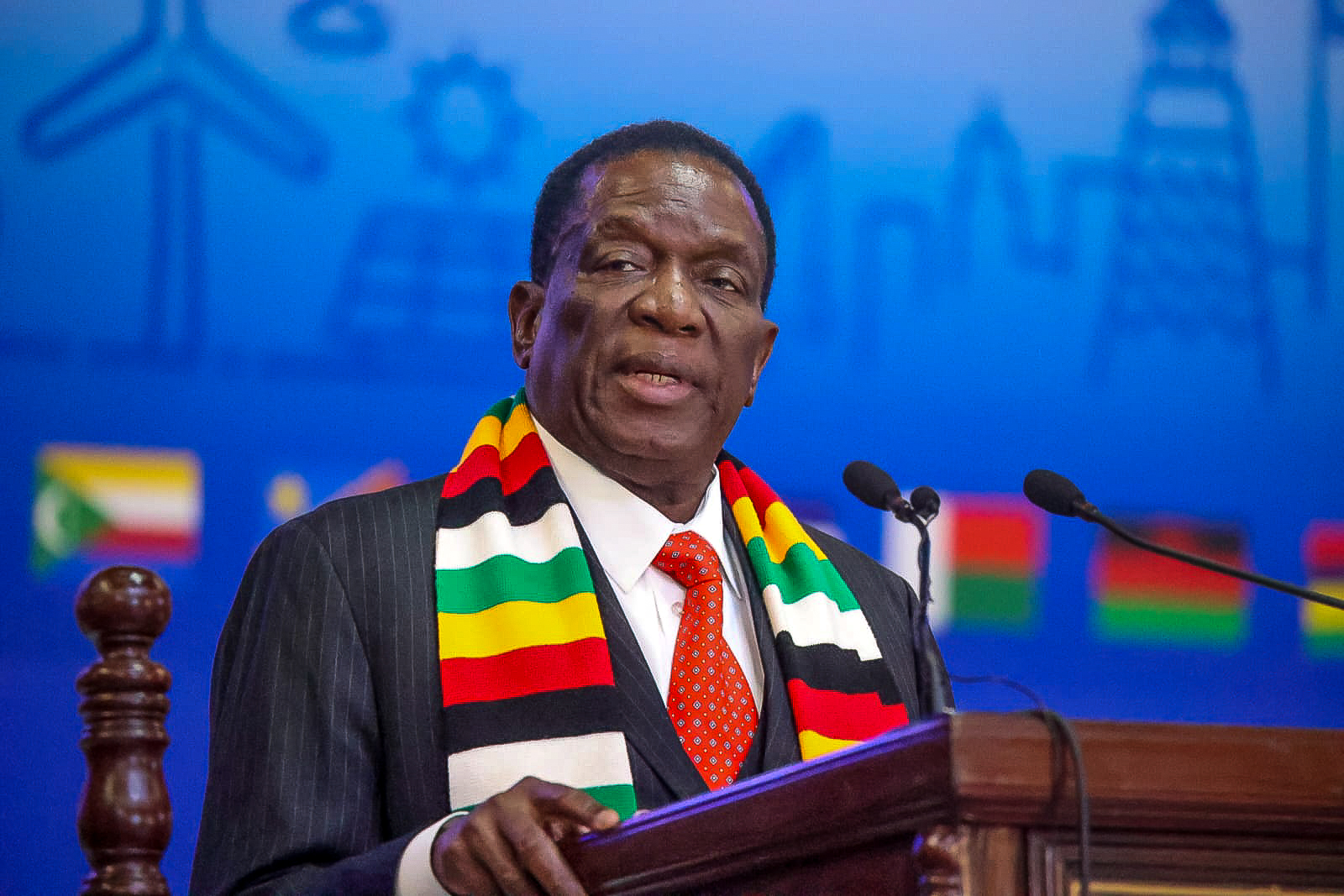
War veterans argue that Mnangagwa’s decision to replace 99-year land leases with title deeds — effectively privatizing state land — is unconstitutional and undermines the core principles of the land reform program they fought for during Zimbabwe’s liberation struggle escalating succession battle within Zimbabwe’s ruling Zanu PF party has taken an unprecedented legal turn, with a group of war veterans challenging President Emmerson Mnangagwa’s controversial land tenure policy.. This case, filed at the High Court, has now become the latest flashpoint in the internal political turmoil within Zanu PF.
The lawsuit seeks a judicial declaration that Mnangagwa’s land tenure policy is in violation of several key sections of the Zimbabwean Constitution, specifically those addressing land rights, security of tenure, and the state’s ownership of agricultural land. The applicants are five war veterans, led by the outspoken former freedom fighter Joseph “Ginger” Chinguwa and the War Veterans Pressure Group Trust. The case accuses the President of undermining the foundation of Zimbabwe’s land reform program, which was a central pillar of the liberation struggle.
The respondents in the case are President Mnangagwa, Lands and Agriculture Minister Anxious Masuka, and the Zimbabwe Land Commission. The war veterans are represented by renowned human rights lawyer and prominent opposition figure Tendai Biti of Tendai Biti Law. This legal battle comes on the heels of the government’s efforts to push forward with Mnangagwa’s ambitious Land Tenure Implementation Programme.
The legal challenge follows the launch of Mnangagwa’s Land Tenure Implementation Programme at his private Pricabe Farm in Sherwood, Kwekwe, in December of the previous year. The programme, being rolled out by the Land Tenure Implementation Committee, is chaired by controversial businessman Kudakwashe Tagwirei, a close ally of the President. Critics argue that the move to replace 99-year leases with title deeds is not merely a reform but a calculated political move designed to consolidate Mnangagwa’s power ahead of potential leadership changes within Zanu PF.
While the government has positioned this land tenure reform as a necessary step to modernize Zimbabwe’s land ownership system, war veterans see it as a betrayal. The issuance of title deeds to farmers, they argue, threatens the very principles of communal land ownership that were enshrined in Zimbabwe’s land reform programme. The war veterans’ movement, which once staunchly supported Mnangagwa, has now emerged as one of his most vocal critics.
“We are not against land tenure reform,” Chinguwa stated in a statement following the court filing. “But any reform must be constitutional, transparent, and aligned with the principles we fought for. Privatising land under the guise of empowerment is a betrayal of our cause.”
The reallocation of land under Zimbabwe’s land reform programme was initially intended to rectify colonial-era land imbalances by redistributing land to previously marginalized black Zimbabweans. However, the war veterans argue that transforming the land into private property, as Mnangagwa is proposing, would reverse the gains made during the liberation struggle and concentrate land ownership in the hands of a few elites, rather than maintaining the land as a national resource for the benefit of all Zimbabweans.
The war veterans’ lawsuit marks a deepening rift between Mnangagwa and significant factions of the war veterans’ movement, which was once a critical pillar of his political base. In the past, Mnangagwa has relied heavily on the support of war veterans, particularly during his rise to power in 2017 after the ousting of former President Robert Mugabe. However, the lawsuit signals a fracture in this alliance, as disillusioned war veterans now publicly distance themselves from the President’s policies, especially with regard to land reform.
Analysts view this legal challenge as more than just a dispute over land policy — it is a sign of the growing power struggle within Zanu PF as factions within the party jostle for influence in a post-Mnangagwa era. The war veterans, who have traditionally been seen as a loyal bloc within the party, are now positioning themselves against the President, accusing him of betraying their revolutionary values for political gain.
Critics further argue that Mnangagwa’s land tenure policy is designed to strengthen his political base by winning the favor of Zimbabwe’s powerful business elites. By issuing title deeds, Mnangagwa may be hoping to secure the loyalty of these economic players, especially those in the commercial farming and mining sectors, to help him maintain political dominance within the party and the country.
War Veterans Sue Mnangagwa Over Controversial Land Tenure Policy, Sparking Political Rift
The outcome of this legal battle could have profound implications for Mnangagwa’s land reform agenda and his broader political strategy. If the court rules in favor of the war veterans, it could derail Mnangagwa’s plans to privatize land and potentially undermine his authority within Zanu PF. Such a decision would also mark a significant setback for his vision of transforming Zimbabwe’s agricultural sector into a more market-driven economy.
For the war veterans, a favorable ruling would be a victory not only for their cause but also for the preservation of the principles that guided Zimbabwe’s land reform programme. It would also send a strong message that the legacy of the liberation struggle remains a key factor in Zimbabwe’s political future.
In conclusion, the war veterans’ legal challenge represents a critical moment in Zimbabwe’s ongoing power struggle and the future of its land reform policies. It highlights the tensions between Mnangagwa’s vision for the country’s agricultural sector and the war veterans’ desire to protect the land reform legacy they fought for. The case also signals the growing fractures within Zanu PF as factions within the party battle for dominance in a post-Mnangagwa political landscape.
The war veterans’ challenge is not just a legal fight over land rights; it is also a political battle that could reshape the direction of Zimbabwe’s future, with far-reaching consequences for both the nation’s land ownership system and the future leadership of Zanu PF. As the legal proceedings unfold, the outcome will likely have lasting effects on the future of Zimbabwe’s political and economic trajectory.
-

-

-

-

-

-

-

-

-

-

