
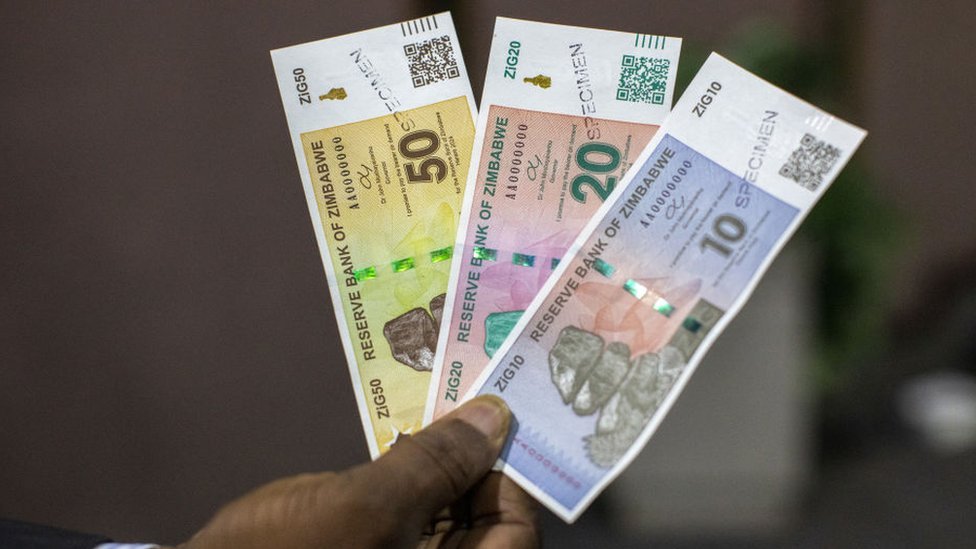
The Government of Zimbabwe has declared that it will take firm action against schools that refuse to accept the Zimbabwe Gold (ZiG) currency as a valid form of payment for school fees. This comes as authorities move to reinforce the country’s official multi-currency system and promote the use of the newly introduced ZiG in all sectors, including education.
Speaking in Harare last week while addressing Junior Parliamentarians, Primary and Secondary Education Minister Torerai Moyo expressed serious concern over the continued rejection of ZiG by some schools. He stated that such practices were illegal and in direct violation of government policy.
“Why are schools out there rejecting the ZiG currency as payment for fees?” Moyo asked. “Give us the names of such schools. We want to deal with them. We are in a multi-currency system, and ZiG is legal tender in this country.”
The ZiG, introduced by the Reserve Bank of Zimbabwe (RBZ) in April 2024, replaced the depreciating Zimbabwean dollar (ZWL) and is backed by the country’s gold and foreign currency reserves. Its introduction was part of broader efforts by the government to stabilise the economy, restore confidence in the local currency, and reduce reliance on the U.S. dollar.
Despite this, reports have emerged of schools and other service providers demanding exclusive payment in U.S. dollars, causing frustration for parents and guardians who earn their income in local currency. Many families have expressed concern that the refusal to accept ZiG is not only illegal but also discriminatory, placing undue financial pressure on low-income households.
Government Cracks Down on Schools Rejecting ZiG Currency
Minister Moyo made it clear that such behaviour would no longer be tolerated. He warned that the Ministry of Primary and Secondary Education is ready to take disciplinary action against any school found violating the directive.“Any school refusing to accept ZiG is operating outside the law,” he said. “It is the responsibility of every institution, especially those in education, to uphold national policy. We will take action. No one is above the law.”
Moyo’s remarks were aimed not only at school administrators but also at empowering young leaders to hold institutions accountable. He encouraged the Junior Parliamentarians to speak out against non-compliant schools and report them to authorities.
“You are the voice of the students—help us make sure no learner is turned away simply because their parents paid in ZiG,” Moyo said. “This is a national currency, and it must be treated as such by all institutions, public or private.”
The minister’s comments have been welcomed by many parents, especially those in rural and high-density areas where access to U.S. dollars is limited. Several parents shared their experiences of being humiliated or turned away by school officials for attempting to pay fees in ZiG.
“We want our children to be in school, but we earn in local currency,” said Sarah Chikafu, a mother of three from Kuwadzana. “Some schools make us feel like we’re worthless just because we don’t have U.S. dollars. It’s not fair.”
Economic analysts have also weighed in on the issue, noting that the rejection of the ZiG undermines public confidence in the currency and sends mixed signals about the government’s commitment to economic reform.
“The success of any local currency depends on public trust and consistent enforcement,” said economist Tinashe Moyo. “If service providers, especially government-regulated institutions like schools, reject the currency, it sets a dangerous precedent and weakens the monetary system.”
In response to growing concerns, the Reserve Bank of Zimbabwe has continued to reassure the public that the ZiG is a stable and secure currency, backed by real assets. The central bank has urged all institutions to accept it as legal tender and warned of potential penalties for non-compliance.
As the new school term progresses, the Ministry of Primary and Secondary Education is expected to intensify inspections and audits to ensure full compliance. Parents have been encouraged to report any school that refuses to accept the ZiG.
The move to enforce the use of ZiG in schools is seen as part of a broader government effort to normalise and institutionalise the currency across all sectors of the economy. By holding schools accountable, the government hopes to set an example and reinforce the legitimacy of its local monetary policy.
In the meantime, the focus remains on ensuring that no child is denied an education due to currency discrimination. Minister Moyo’s call to action is a clear message: the ZiG is here to stay, and every institution must respect it.
Source- ZimEye
-

-

-

-

-

-

-

-

-

-

