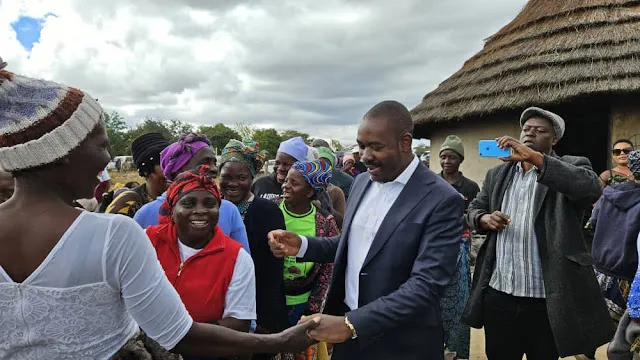
Opposition leader Nelson Chamisa has called for urgent national reform following Tuesday’s tragic accident in Chitungwiza that claimed 17 lives. In response to the devastating crash, Chamisa deployed a team of policy and technical experts to investigate the underlying causes. The team presented its preliminary findings on Wednesday, painting a sobering picture of systemic failures that go far beyond the collision itself.
“What happened on July 22nd along Seke Road must not be allowed to fade into just another passing headline,” Chamisa’s team said in its report. “This moment must mark a turning point—a time when the nation takes a serious pause and reflects on the heavy cost of neglect, dysfunction, and leadership failure.”
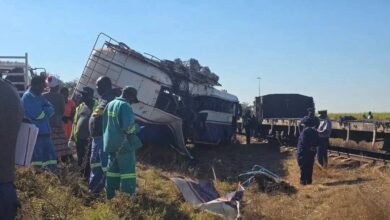
The deadly crash involved a haulage truck and a commuter omnibus, with witnesses describing a scene of horror—mangled bodies, cries for help, and frantic efforts by civilians to rescue trapped passengers. Yet, the tragedy, Chamisa said, must be understood not only in terms of what happened on the road that day, but also as a reflection of deeper structural problems plaguing Zimbabwean society.
Chamisa’s team urged the public and government alike to look beyond the metal wreckage and into the lives that were lost—each name representing a personal story, a family, and a future cut short. Among the victims were a young couple and their infant child. According to reports, the trio had embarked on a simple errand: to register their baby’s birth. That errand ended in unimaginable tragedy.
“Why should anyone be forced to travel across towns and provinces for something as basic as birth registration?” Chamisa asked during a press briefing. “This is a failure of governance. It’s proof that the state has not prioritised decentralisation. Services should meet the people where they are—not demand long,
Chamisa Demands National Reform After Chitungwiza Crash That Claimed 17 Lives
Another fatality was an elderly woman from Murehwa who had come to Chitungwiza with her grandchild to collect groceries. Her story, Chamisa said, illustrates the harsh reality of Zimbabwe’s collapsing economy—where basic goods are no longer readily available in rural areas, forcing vulnerable citizens to endure long-distance travel in unsafe conditions.
The report also highlighted Zimbabwe’s lack of disaster preparedness and weak emergency response systems. According to eyewitness accounts, it took far too long for rescue operations to begin. There was no state-owned emergency crane or cutting equipment on site. In the immediate aftermath, desperate citizens resorted to social media, pleading for a privately-owned crane to be dispatched.
“This is not just tragic—it is shameful,” Chamisa declared. “Where was our state? Where was our national pride? Why did we need to crowdsource rescue equipment while people screamed in agony under a truck? Every second in such a crisis matters, and yet we watched helplessly as lives slipped away.”
Chamisa’s experts said Zimbabwe’s emergency services are grossly under-funded, poorly trained, and ill-equipped to deal with disasters. They described the situation as not just a crisis of infrastructure, but a crisis of leadership and accountability.
Seke Road itself—the site of the crash—came under heavy scrutiny. The report described the road as “unfit for modern traffic volumes,” and said it has long posed a threat to thousands of daily commuters. It criticised the lack of visible traffic enforcement, poor signage, and irregular inspections of heavy vehicles that routinely operate without meeting safety standards.
“Road safety in Zimbabwe has become a gamble with death,” Chamisa said. “We cannot continue like this.”
The opposition leader warned that Zimbabwe must stop “normalising dysfunction and tragedy.” He called for sweeping reforms in several areas:
-
Decentralisation of public services, especially in rural areas
-
Modernisation of critical road infrastructure
-
Comprehensive overhaul of the country’s emergency response capabilities
-
Enforcement of safety and regulatory standards for public and commercial transport
-
Greater investment in healthcare and trauma support for victims and families
“This accident is not an isolated incident,” Chamisa concluded. “It is part of a broader story of national neglect. We must confront it head-on—not with blame, but with resolve. Let us come together as a country—not in mourning, but in rebuilding. We owe that much to the lives lost.”
With emotions still raw across the country, Chamisa’s intervention has resonated with many Zimbabweans who feel trapped in a daily struggle to survive amid growing instability and governmental failure. Whether the call for reform is heeded remains uncertain—but the pain of Chitungwiza has clearly shaken the nation’s conscience.