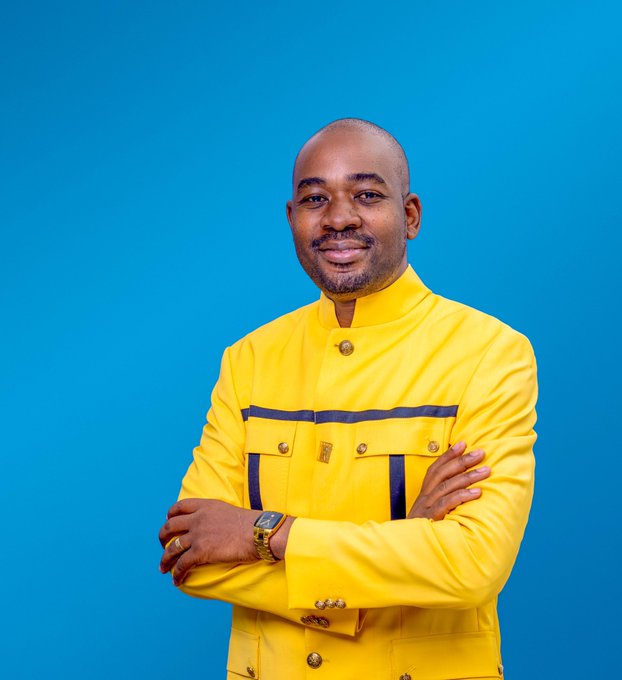
Zimbabwe’s main opposition figure, Advocate Nelson Chamisa, has officially returned to active politics—but not through a traditional political party. Instead, Chamisa has unveiled plans to launch a citizen-driven movement aimed at mobilising Zimbabweans to demand democratic reforms, accountability, and leadership rooted in people-first principles.
The announcement was made during a high-profile media conversation with broadcaster and personality MisRed, drawing nationwide attention and igniting debate over whether his unorthodox approach can deliver tangible change in a country where politics has long been defined by entrenched power and party structures.
Chamisa made it clear that he is not starting another political party, but rather creating a grassroots movement focused on civic participation and collective action. He framed this shift as a necessary response to what he called “the failure of conventional politics” to address Zimbabwe’s deep-seated socio-economic and governance challenges.
“We are not forming a party. We are building a movement that places citizens at the centre,” Chamisa declared. “A movement that’s not defined by headquarters, titles or positions, but by values, vision, and the will of the people.”
He described the new formation as agile, inclusive, and detached from the political baggage associated with previous opposition outfits—particularly the Citizens Coalition for Change (CCC), which he left earlier this year, citing infiltration and sabotage.
Chamisa’s Political Comeback Sparks Debate Over Strategy and Structure
Chamisa’s announcement has sparked renewed enthusiasm among his loyal supporters, many of whom view him as the only credible challenger to Zanu PF’s decades-long rule. Social media platforms have been awash with messages of support, celebration, and speculation about what shape the movement might take.
However, not everyone is convinced that an informal, structureless movement is the right strategy to unseat a deeply entrenched ruling party. Political analyst Glen Mpani, in an open letter addressed to Chamisa, warned that history has not been kind to leader-centric movements that lack institutional depth.
“You cannot outrun the reality of political power: to govern, you must organise,” Mpani wrote in a widely shared post on X (formerly Twitter). “Movements may inspire, but only political parties can take power.”
Mpani acknowledged Chamisa’s ability to inspire and mobilise millions, but cautioned that emotional appeal alone will not deliver electoral victory or democratic transformation. He drew comparisons to previous elections in 2018 and 2023, where Chamisa’s campaigns generated enthusiasm but fell short of securing state power—largely, he argued, due to weak organisational structures.
“A movement is built to awaken, not to win. A party is a vehicle for power,” Mpani added. “Inspiration without structure creates a cycle of hope and heartbreak. If you want to lead a nation, you must build a party. There is no shortcut.”
His comments have sparked wider debate among Zimbabweans, political analysts, and civil society actors. Some agree that Chamisa must eventually form a solid political institution capable of fielding candidates, protecting votes, and contesting power at all levels of government. Others argue that the rigid party system has failed the country for decades and that a new, values-driven approach could resonate more powerfully with an increasingly disillusioned population.
Chamisa’s decision to avoid launching a party—at least for now—may also reflect strategic caution. Analysts suggest that given the history of state-sponsored interference in opposition parties, Chamisa may be trying to delay formalising the structure until the political climate is more favourable.
Still, with the 2028 general elections on the horizon, pressure is mounting for him to clarify the roadmap. Many within his support base are eager for direction, especially after his controversial exit from the CCC left a vacuum in the opposition landscape.
In the meantime, Chamisa continues to rally Zimbabweans around the idea of people-powered politics. He has emphasised that the new movement will not be defined by elites or electoral cycles, but by civic engagement, grassroots activism, and ethical leadership.
As Zimbabwe continues to grapple with economic instability, political repression, and growing public frustration, Chamisa’s return marks a significant moment in the opposition’s ongoing evolution. Whether he can translate his renewed moral vision into political traction will depend not just on ideals—but on how, when, and whether he builds the structures necessary to contest and capture power.
For now, Chamisa’s comeback has rekindled hope and reignited national debate. But the road ahead is fraught with strategic choices that could determine whether his movement becomes a footnote—or a force—in Zimbabwe’s political future.