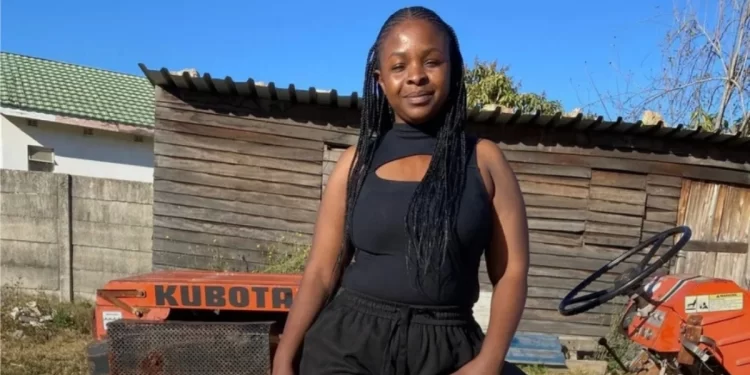
HARARE – Outspoken social media personality and motivational speaker Mai Jeremaya has ignited a firestorm online after taking to Facebook to deliver an emotionally raw and spiritually charged message directed at two men she accuses of raping her — identified only as Thabo and Martin.
In what she described as her “final words” on the traumatic chapter of her life, Mai Jeremaya did not hold b
Mai Jeremaya began her lengthy post by addressing Thabo and Martin directly. In a twist that many followers found both jarring and profound, she thanked them for being the instruments that, in her view, God used to bring about a transformation in her life.
“Nhamo inowondesa,” she wrote, using the Shona phrase which means “suffering humbles.” She elaborated that true pain—not just hardship, but deep, scarring trauma—had stripped her down and led her to a place of surrender and growth.
“Makashandiswa naMwari kushandura hupenyu hwangu,” she wrote. “You were used by God to change my life. You ate where you were not supposed to eat and stole from me. I used to carry a foul-smelling shame around. I walked past people who knew what happened, and I felt invisible. I feared everyone. I longed for love.”
Her post struck a raw nerve, not only because of the serious accusations she leveled, but also because of the mixture of emotional vulnerability and righteous fury that pulsed through every line.
The post’s most viral moment came as Mai Jeremaya shifted from reflection to warning. Using deeply spiritual language, she declared that Thabo and Martin would not escape the consequences of their actions—not in the courts of man, perhaps, but in the court of divine justice.
“Muchatambura Vakomana”: Mai Jeremaya Delivers Scathing Rebuke to Alleged Abusers in Viral Facebook Post
“Muchatambura vakomana. Mucharara nenzara. Mucharwadziwa kusvika matendeuka.” (“You will suffer, you will go hungry, you will feel pain until you repent.”) Her voice in the post echoed that of a prophet, declaring that while they might believe they have “won,” the spiritual burden of their deeds would soon crush them.
She invoked an A-Level Economics principle to make her case: that in the grand balance of life, someone’s pain can lead to someone else’s growth—and vice versa. “Kuipa kwechimwe, kunaka kwechimwe,” she explained, referencing the Yin and Yang of suffering and growth.
“I now understand that when you wrong someone who has done you no harm, the universe will repay that debt—with interest,” she added.
The climax of her post was both a curse and a plea. While she said she felt sorry for the two men, she insisted that she could not—and would not—pray for their prosperity until they acknowledged their wrongs and sought God’s mercy.
“You think you won, so you never bothered to seek forgiveness, not even in private,” she wrote. “You were blinded by pride. Brotherhood is not even proud of you. May you rot in poverty until you seek Jesus.”
Her words, though harsh, resonated with many who have experienced trauma and felt silenced by society. The idea that pain could be transformed into power, and that justice could come not only from courts but also from spiritual reckoning, hit home with her growing base of followers.
The post sparked widespread reaction across Zimbabwean social media. Some hailed Mai Jeremaya as a fearless survivor reclaiming her voice and seeking justice through the only platform available to her. Others questioned the naming of individuals without legal due process, while some urged her to focus on healing rather than condemnation.
Psychologist and gender activist Ruvimbo Nyamayaro said Mai Jeremaya’s words reflect the internal conflict many survivors face.
“Victims are often pressured to forgive quickly and stay silent. But sometimes, expressing anger is part of the healing process,” she said. “Her post might be uncomfortable to read, but it’s real. And realness has its place in healing.”
For her part, Mai Jeremaya seems unbothered by controversy. In a follow-up post, she reiterated that her intention was not to stir hatred, but to speak her truth and warn others against taking silence for weakness.
“I said what I said,” she wrote bluntly.
Her defiant stance, raw storytelling, and spiritual resilience continue to build her reputation as one of Zimbabwe’s most outspoken and complex digital voices—someone who has turned her personal trauma into a public reckoning.
Whether viewed as a cry for justice, a spiritual rebuke, or an act of self-empowerment, Mai Jeremaya’s words have left the nation talking—and perhaps forced many to listen.