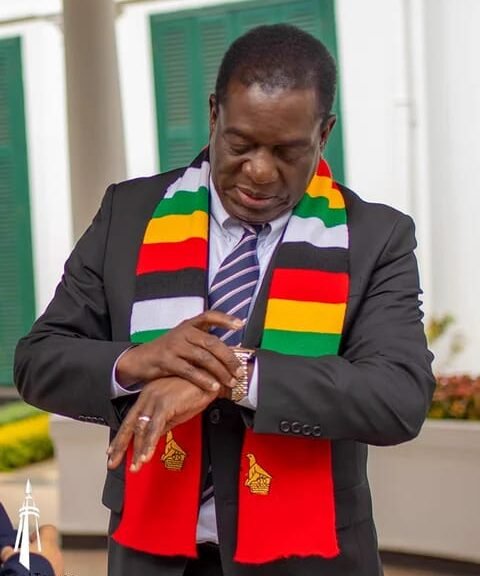
In a move widely criticized as another empty gesture designed to distract from Zimbabwe’s deepening domestic crisis, President Emmerson Mnangagwa on Thursday delivered remarks at the Japan Business Forum during Zimbabwe’s designated “National Day” at the upcoming Expo 2025 in Osaka. Framed by state media as a moment of international significance, the event has instead drawn scorn from analysts and citizens who accuse Mnangagwa of once again engaging in performative diplomacy while ignoring the mounting challenges facing his country.
The President hailed the occasion as “an honour,” and painted a glowing portrait of Zimbabwe under the theme: “Beyond the Limits: Experience Zimbabwe; Opportunities; and our Future.” In his speech, Mnangagwa described the country as a land of “vibrant culture, tourism, and growing economic potential”—a narrative many say is increasingly at odds with the harsh realities on the ground.
Economists and opposition leaders were quick to call out the speech for what they see as a pattern of recycled rhetoric. “Every year it’s the same buzzwords—opportunities, growth, innovation—but back home we have collapsing infrastructure, unpaid civil servants, and a currency crisis,” said political analyst Tinashe Nyamunda. “These forums are just expensive PR tours that do little to change the conditions ordinary Zimbabweans live under.”
The president also claimed that Zimbabwe is “making progress towards Vision 2030,” a development blueprint aimed at transforming the country into an upper-middle-income economy. However, with inflation nearing triple digits, youth unemployment skyrocketing, and basic public services on the brink of collapse, many argue that Vision 2030 has become a fantasy narrative used to deflect accountability.
In a further attempt to attract international interest, Mnangagwa highlighted “vast investment opportunities” in agriculture, energy, infrastructure, and technological innovation—sectors plagued by systemic corruption, erratic policies, and policy reversals. Investors have long cited Zimbabwe’s lack of legal safeguards, political instability, and volatile currency as reasons for staying away, despite repeated promises of reform.
“This talk of investment opportunities is not only misleading, it’s borderline dishonest,” said a Harare-based economist who requested anonymity. “You can’t invite investors when you’re constantly changing monetary policies and when land rights are still not secure. The local business environment is hostile, and investors know that.”
Mnangagwa also took the opportunity to express appreciation for Japan’s continued support in areas such as irrigation, education, and humanitarian aid. However, critics pointed out the irony that foreign aid is needed to plug holes in essential services that the government has chronically underfunded or mismanaged.
Mnangagwa’s Osaka Address Dismissed as Another Hollow Public Relations Exercise
“It’s absurd to boast about foreign assistance as if it’s an achievement,” said political commentator Violet Gonda. “That support exists because the state has failed in its primary responsibilities to its citizens.”
Back home, Zimbabweans continue to face daily hardships. Power outages last up to 12 hours in some areas, hospitals lack basic medication, and the cost of living is spiraling out of control. Meanwhile, public sector wages remain stagnant, and the recently introduced ZiG currency has done little to inspire confidence, with many preferring to trade in US dollars.
Mnangagwa’s trip to Japan is just the latest in a series of high-profile international appearances that have been met with growing cynicism. Many see them as part of a government strategy to maintain the illusion of progress, rather than confront the country’s deep-rooted issues head-on.
Social media reactions to the Expo address were largely dismissive, with some users mocking the speech as “wishful thinking on a global stage.” Others questioned the value of such trips when tangible benefits for ordinary citizens remain elusive.
“Why not focus on fixing the mess at home instead of flying across the world to make speeches?” wrote one user on X (formerly Twitter). “We don’t need expos—we need hospitals with medicine, schools with books, and roads without potholes.”
As Zimbabwe continues to reel from economic decline, political repression, and widespread public disillusionment, Mnangagwa’s Osaka appearance seems unlikely to shift perceptions. For many, it was just another empty stunt—a well-rehearsed performance meant for international audiences, while the real crisis festers at home.
Source- ZimEye