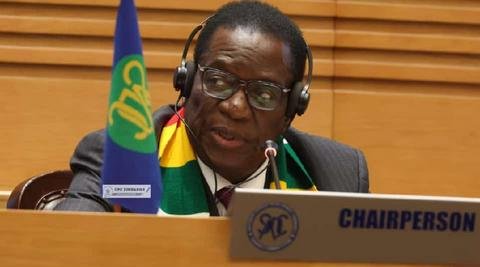
Mnangagwa Concludes Official Visit to Japan

President Emmerson Mnangagwa on Friday concluded a productive five-day working visit to Japan, marking a significant diplomatic and economic milestone in Zimbabwe’s international engagement agenda. The trip focused on deepening bilateral relations, attracting investment, and positioning Zimbabwe as a forward-looking destination for trade, tourism, and technological innovation.

Central to the visit was Zimbabwe’s participation in the upcoming World Expo 2025 in Osaka, where President Mnangagwa presided over the country’s National Day celebrations. The event showcased Zimbabwe’s unique cultural heritage and investment potential through immersive digital displays, including 3D holograms and virtual reality (VR) tours of key tourism sites such as Victoria Falls and the Great Zimbabwe ruins.

President Mnangagwa used the platform to market Zimbabwe’s evolving image as a modern, technology-embracing nation with abundant natural resources and business opportunities. “We are a country that is open for business — open to innovation, trade, tourism, and partnerships that go beyond limits,” he declared to an audience of potential investors and dignitaries.

A major highlight of the visit was the inaugural Zimbabwe-Japan Business Forum, which brought together stakeholders from both countries. The forum culminated in the signing of three Memoranda of Understanding (MoUs) covering tourism, mining, and manufacturing — sectors the Zimbabwean government has identified as engines for economic growth.

Mnangagwa Concludes Japan Visit With Bold Push for Investment, Trade, and Innovation

Speaking at the forum, Finance Minister Professor Mthuli Ncube, who accompanied the President, emphasized that the engagements reflected Zimbabwe’s growing appeal as an investment destination. “We’re no longer just asking for capital. We’re offering bankable, scalable opportunities supported by reforms and an improving ease of doing business environment,” he said.

One of the most promising meetings was held with Toyota Tsusho Corporation, a major Japanese industrial player. The company expressed interest in expanding its operations in Zimbabwe, particularly in the supply of public transport vehicles and ambulances. Discussions also included prospects for assembling semi-knockdown kits within Zimbabwe — a move that could stimulate local job creation and industrial growth.

The President also met with representatives of the Japan International Cooperation Agency (JICA) to explore expanded collaboration in sustainable agriculture and infrastructure development. Talks focused on increasing productivity, boosting exports, and scaling up key projects like road rehabilitation and dam construction.

In another strategic engagement, President Mnangagwa held bilateral talks with Governor Ichimi Katsuyuki of Mie Prefecture, which imports petalite from Zimbabwe. The two leaders explored value-addition opportunities, including refining petalite into battery-grade lithium sulphate, aligning with Zimbabwe’s ambitions to become a hub for lithium processing in Africa.

Zimbabwe’s Expo 2025 pavilion drew significant attention during the visit. According to Prof Ncube, the exhibition stand surpassed expectations, attracting thousands of visitors intrigued by the country’s blend of traditional artistry and modern digital storytelling. “We were among the most visited stands. People queued to experience our VR content. This speaks volumes about the interest Zimbabwe can generate when we present ourselves creatively,” said the minister.

He also underscored the importance of follow-through. “Engagements are only the beginning. Government agencies like ZIDA must move with urgency and efficiency to process investment inquiries. The private sector must also match this energy and build on the momentum,” Ncube stressed.

The visit also served as preparation for Zimbabwe’s participation in the upcoming Tokyo International Conference on African Development (TICAD), where African leaders are expected to discuss the continent’s development priorities with Japanese stakeholders. President Mnangagwa’s engagements in Tokyo and Osaka have laid crucial groundwork ahead of that event.

Reflecting on the outcomes, President Mnangagwa described the trip as “a meaningful step in cementing a long-term partnership with Japan — one rooted in mutual respect, shared development goals, and innovation.” He reaffirmed Zimbabwe’s commitment to reform and to building a competitive economy that delivers for its people.

As the country returns to business, officials say the challenge now is converting the promising leads into tangible investments, infrastructure upgrades, and job creation opportunities that reflect the aspirations of Zimbabwe’s Vision 2030.

With the Japanese visit concluded, President Mnangagwa’s administration is expected to intensify its focus on delivering measurable outcomes from these engagements — turning diplomacy into development and setting the stage for a new era of international cooperation.

Source- Bulawayo24
Exit mobile version