
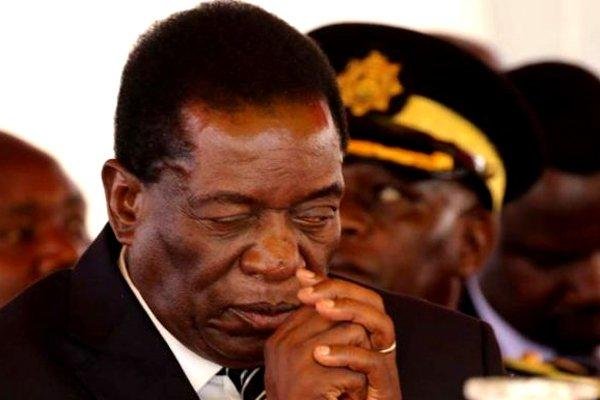
In a surprising turn that could alter Zimbabwe’s historical narrative, government spokesperson Nick Mangwana has—perhaps unintentionally—debunked a long-held myth surrounding President Emmerson Mnangagwa’s liberation war legacy. The revelation has sparked vigorous debate across social and political circles, raising questions about the accuracy of one of Zimbabwe’s foundational liberation stories.
On Friday, Mangwana took to Twitter to share official prison records revealing that President Mnangagwa was incarcerated at Khami Maximum Prison for 15 years, beginning on 13 September 1966. The records also indicate that he was transferred to Harare Remand Prison on 6 January 1972 for deportation. Importantly, the prison admission register contains no mention of a death sentence—a stark contrast to Mnangagwa’s long-standing claim that he narrowly escaped execution.
“Records at the Prison also show that His Excellency President @edmnangagwa was once jailed at Khami Maximum Prison for 15 years,” Mangwana tweeted. “The admissions register shows that the President was admitted into the D-Class at the jail on 13 September 1966 and was transferred to Harare Remand Prison on 6 January 1972 for deportation.”
Accompanied by photographs of Mnangagwa’s visit to the prison, Mangwana’s tweet ignited a firestorm of discussion online. The revelation prompted sharp commentary, including from whistleblower and former prison officer Shepherd Yuda, who wrote, “I told people that ED was never sentenced to death. Records now indicate otherwise.”
Mangwana’s disclosure echoes findings made public a few years earlier by Mnangagwa’s authorised biographer, economist Eddie Cross. In his 2021 book, Cross revealed that the president was never sentenced to death in 1965. Furthermore, Cross pointed out that the crime Mnangagwa was accused of was not severe enough to merit capital punishment.
Cross’s conclusions were drawn directly from High Court records, which clearly state: “This is not such a case, although it is a serious crime according to law. I do not therefore propose to sentence you to death in this case.”
Nick Mangwana’s Revelation Challenges Mnangagwa’s Liberation War Legend
Oxford historian Dr. Miles Tendi further bolstered this position, noting that Mnangagwa’s 2015 claim—published in the Sunday Mail—that he was sentenced to death but spared due to his youth was false. According to court transcripts, the judge exercised discretion, determining that the bombing incident Mnangagwa was charged with did not warrant the death penalty.
Mangwana’s tweet also drew attention for mentioning that Mnangagwa was “transferred for deportation.” This phrase sparked debate and speculation online about the president’s nationality and the circumstances surrounding his prison release.
“Deportation… Is he not a Zimbabwean?” asked Facebook user Enias Vushe.
Another commenter questioned, “Deported to where? Don’t tell me the deportation failed!” Others speculated that Zambia—where Mnangagwa is reported to have been born—was the likely destination.
Adding fuel to the speculation, Shepherd Yuda suggested a political conspiracy: “It was a prisoners exchange deal brokered by CIO to allow a decoy in ZPF.” This insinuation implies that Mnangagwa’s release or transfer may have involved state intelligence manipulation, possibly designed to alter or protect his historical profile.
Together, Mangwana’s prison records, Cross’s biography, and the High Court transcripts form a consistent narrative: President Emmerson Mnangagwa was never sentenced to death. The long-held tale of a young freedom fighter spared the noose solely because of his age appears to be a constructed piece of liberation mythology.
This revelation arrives amid a period of heightened scrutiny in Zimbabwe, as citizens increasingly re-examine their country’s history and leadership in light of economic challenges, political repression, and widespread allegations of corruption among the elite.
The consequences of this revelation are significant. If the foundational credentials of Zimbabwe’s current president are shown to be exaggerated or false, it invites broader questions about the reliability of other elements within the official liberation war narrative. What other stories, long accepted as fact, might warrant re-examination?
Zimbabwe’s liberation war legacy has been a cornerstone of national identity and political legitimacy. As such, these challenges to Mnangagwa’s personal history could ripple through the country’s political discourse and public consciousness.
As this story develops, it will be important to observe how the government responds to these challenges. Transparency and open dialogue could be crucial in addressing public concerns and maintaining trust.
For now, the unravelling of this myth serves as a potent reminder of the need to critically examine even the most revered narratives. Zimbabweans, faced with ongoing national challenges, may find in this moment an opportunity to reassess their history and demand greater accountability from those who lead.
Source- ZimEye
-

-

-

-

-

-

-

-

-

-

