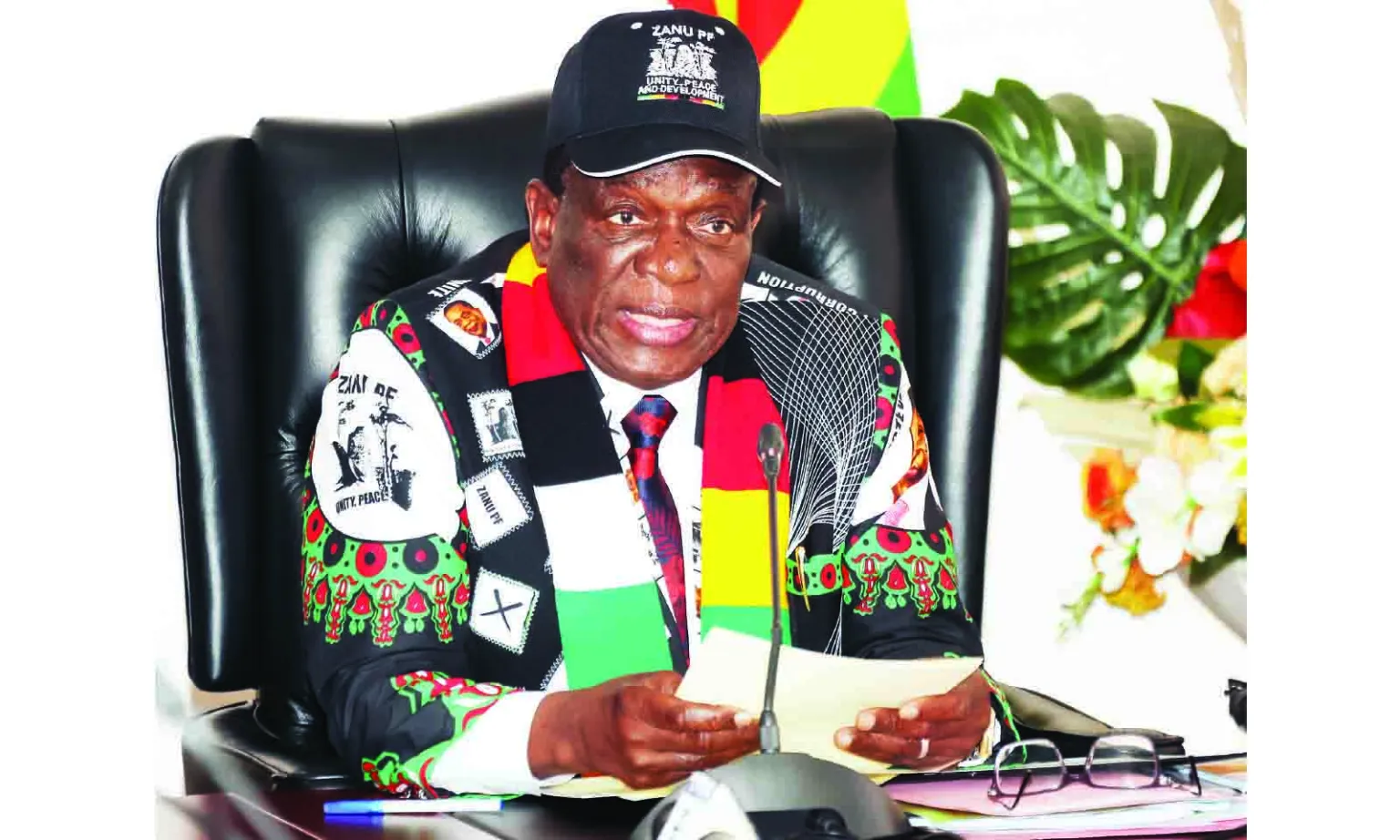
President Emmerson Mnangagwa on Thursday pointedly avoided addressing the simmering controversy surrounding the co-option of his close ally, business mogul Kuda Tagwirei, into the ZANU PF Central Committee during the party’s 385th Politburo session. Instead, Mnangagwa focused his address on liberation war history, party ideology, and mobilisation efforts ahead of national commemorations—leaving many within the ruling party perplexed and raising fresh concerns about widening factional cracks.
The meeting, which many expected would tackle the fallout from Tagwirei’s recent dramatic expulsion from a Central Committee gathering, was notable for what Mnangagwa did not say. The President’s silence on the issue—despite having witnessed the incident firsthand—has deepened speculation that he is struggling to contain rising tensions within the ruling party, particularly among camps loyal to Vice President Constantino Chiwenga and party spokesperson Christopher Mutsvangwa.
Tagwirei, widely seen as a powerful financier behind Mnangagwa’s political machinery, has long been a controversial figure. His rising influence in party structures has angered a growing number of senior figures who view his presence as symbolic of the increasing dominance of wealthy business elites—at the expense of liberation war veterans and military leaders who traditionally wielded power in ZANU PF.
The situation took a dramatic turn recently when Tagwirei was ordered to leave a Central Committee meeting at ZANU PF headquarters in Harare. The incident, which unfolded in full view of Mnangagwa, was interpreted by insiders as a public rebuke, possibly orchestrated by a rival faction. Yet just days later, Mnangagwa appeared alongside Tagwirei at a high-profile charity golf tournament hosted by the businessman, fuelling perceptions of solidarity and a deliberate snub to internal critics.
Despite mounting pressure to address the Tagwirei saga, Mnangagwa offered no clarification or public remarks during Thursday’s Politburo session. Instead, he chose to underscore party unity, revolutionary principles, and the importance of ideological discipline.
Mnangagwa Sidesteps Tagwirei Storm in Politburo, Fuels ZANU PF Power Struggles
“ZANU PF must never compromise on its constitution, values, principles and ideology,” Mnangagwa said in his prepared speech. “We must never be lethargic in our sacred duty to retain power for the purpose of advancing the aspirations of the people.”
The move was seen by many as a strategic deflection—a way to reinforce loyalty without inflaming an already volatile internal battle. Analysts say Mnangagwa is walking a tightrope, attempting to maintain control over a fracturing power base while managing succession tensions that have intensified since the 2017 coup that ousted Robert Mugabe.
Chiwenga, the former army commander who played a central role in that military intervention, has grown increasingly frustrated with what his supporters view as the sidelining of veterans and security sector figures in favour of politically connected businessmen. Mutsvangwa, too, has publicly decried the “capture” of ZANU PF by corrupt “tenderpreneurs” and elite cartels, in what many see as veiled criticism of Tagwirei and his ilk.
Mnangagwa’s reluctance to confront the controversy head-on has not gone unnoticed. His speech emphasised national pride, recent diplomatic engagements, and preparations for Heroes Day and Defence Forces Day celebrations. He praised ZANU PF’s victories in by-elections, pointed to growing grassroots support, and celebrated deepening ties with foreign allies such as Japan, Equatorial Guinea, and Algeria.
“We are seeing increased mobilisation across all party leagues,” Mnangagwa said. “There is no room for complacency.”
He also referenced his recent attendance at the Summit of Liberation Movements in South Africa, using the platform to warn of neo-colonial forces and the need for ideological vigilance.
“The infrastructure that denied us democracy and independence has mutated,” he told delegates. “Robust and fluid strategies are necessary to guarantee the perpetuity of our people-centred governance.”
Still, back home, the President’s silence on Tagwirei’s role and the broader implications for party succession has done little to ease rising tensions. Critics within ZANU PF fear that unresolved questions about who wields real power in the party—and who will take the reins after Mnangagwa—could further destabilise the ruling party ahead of future elections.
“The President is playing political hide-and-seek,” said a senior party official who spoke on condition of anonymity. “He appears next to Tagwirei in public, but refuses to explain what’s happening behind the scenes. That silence is creating more questions than answers.”
As the party heads into a politically charged month marked by national commemorations, all eyes will be on whether Mnangagwa can maintain his balancing act—or whether the cracks within ZANU PF will erupt into full-blown confrontation. For now, the President appears determined to steer the conversation toward history and unity, even as a storm brews quietly in the background.
-
ZESA Claims 41 Days Without Load Shedding, but Zimbabweans Say Power Cuts Persist -
One Killed in Tragic Bus Accident -
Police Arrest Eighth Suspect in Joseph Mutangadura Murder Case -
General Tongogara Honoured 46 Years After His Death -
Greatman Parts Ways With Manager Rastar After Three Years -
One Killed as Illegal Miners Fight Over Sex Worker -
Fresh Wave of Killings Reported in Guruve -
Chamisa Seeks Talks with Political Stakeholders -
Gospel Musician Everton Mlalazi Appointed to OK Zimbabwe Board -
Oscar Pambuka Receives a Toyota Fortuner from Wicknell Chivayo
