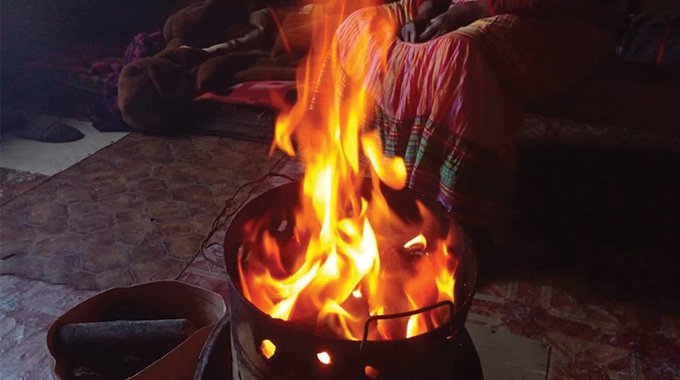
MABASA VILLAGE, ZVISHAVANE – A deep sense of grief and disbelief has engulfed the Mabasa community in Zvishavane after five members of the same family tragically died in their sleep from suspected carbon monoxide poisoning. The heartbreaking incident occurred earlier this week in Chief Masunda’s area and has once again brought attention to the deadly risks associated with using charcoal stoves indoors.
According to preliminary reports, the family had lit a charcoal fire—locally known as a mbawula—to keep warm during the chilly night. Sadly, the brazier continued to burn through the night, silently releasing toxic gases in an enclosed room with no ventilation. The family, comprising adults and children, reportedly went to bed with the stove still glowing and never woke up.
Zvishavane District Development Coordinator, Mr. Darlington Chokera, confirmed the tragedy and expressed condolences to the affected family and the broader community.
“We understand that five people have died at a homestead in Mabasa Village. The police have already visited the scene, and investigations are underway to establish the full circumstances. This is a terrible and painful loss for everyone,” Mr. Chokera said.
Local police have since launched a formal investigation into the matter, though early indications strongly point to inhalation of combustion gases as the likely cause of death. The victims’ bodies have been transported to Zvishavane District Hospital, where postmortems will be conducted to confirm the exact cause.
The devastating news has shaken the rural community, where families are now expressing fear and caution over their own winter heating practices. Residents say the tragedy serves as a grim reminder of the dangers of relying on charcoal-based heating methods inside closed living spaces, particularly during the cold season when many turn to such devices to fend off the bitter cold.
Five Family Members Die in Sleep from Suspected Carbon Monoxide Poisoning in Zvishavane
“I can’t believe it. Just yesterday they were alive, and now they’re all gone,” said a neighbour who visited the homestead in the aftermath of the tragedy. “We are used to using mbawulas in winter, but now we are scared. Something needs to change.”
Medical experts warn that charcoal stoves release not only smoke but also invisible and deadly exhaust emissions, including carbon monoxide—a gas that binds to the blood more efficiently than oxygen, causing suffocation even before victims are aware of any symptoms.
“Carbon monoxide is a silent killer,” explained Dr. Mercy Dhlakama, a public health specialist based in the Midlands Province. “It is colourless, odourless, and very dangerous, especially in enclosed spaces. People using any form of fire indoors should ensure there is adequate ventilation.”
She urged the public to avoid using mbawulas or any combustion-based heating systems in sealed rooms. “Even leaving a small window open can make a difference,” she said.
The incident has prompted renewed calls for urgent public awareness campaigns, particularly in rural and high-density communities where such traditional heating methods remain common. Civil society organisations and health officials are urging the government and local authorities to launch education drives on indoor air pollution and promote access to safer heating alternatives.
“This is a public health crisis that repeats itself every winter,” said Farai Mupunga, a community organiser working with the Zvishavane Health Trust. “We cannot continue to lose lives like this. It’s time for government and development partners to step in with both information and resources.”
Many Zimbabweans took to social media to express shock and sympathy for the family, while also highlighting the role of poverty and energy insecurity in driving people to use dangerous household energy sources. Power outages, high electricity costs, and unavailability of safe heating equipment are often cited as contributing factors.
“As long as people can’t afford or access safer heating options, we’re going to keep hearing these tragic stories,” said one Twitter user. “This is not just about awareness. It’s about poverty.”
Meanwhile, funeral arrangements are underway for the five deceased family members, with neighbours and relatives rallying together to support the grieving household. Local councillors and traditional leaders have also visited the family to offer condolences and call for collective action to prevent further loss of life.
As winter continues to grip Zimbabwe, health officials and emergency responders are expected to increase community outreach efforts, encouraging families to use safer heating methods and ensure ventilation at all times. Zvishavane ,Mabasa Village tragedy stands as a painful reminder that warmth should never come at the cost of life.