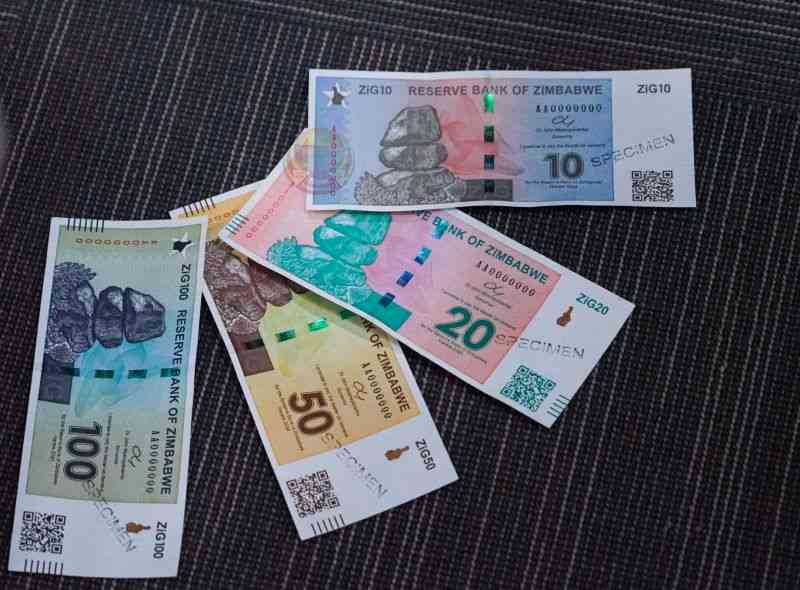
When the Zimbabwe Gold (ZiG) currency was introduced in April 2024, it was hailed as a bold step toward achieving economic stability, curbing inflation, and restoring confidence in the country’s monetary system. Backed by gold and foreign currency reserves, and anchored on promises of tight monetary discipline, ZiG was intended to end years of exchange rate volatility and bring predictability to business operations. But more than a year later, growing evidence suggests the new currency may be doing more harm than good—especially in the retail and informal sectors that form the backbone of Zimbabwe’s economy.
Although the government maintains that the economy is on track to grow by six percent in 2025—bolstered by a rebound in agriculture, infrastructure development, and improved investor sentiment—on-the-ground realities paint a starkly different picture. A growing number of retail shops are shutting down due to operational constraints linked to ZiG, and the broader economy is showing signs of strain.
A recent analysis by stockbroking firm FBC Securities argued that ZiG is contributing to “growing stability” due to its foreign reserve backing and a restrictive monetary policy framework. However, critics say that such stability is largely superficial, masking deeper economic dislocations. The policy-induced liquidity crunch and limited convertibility of ZiG have left many small and medium enterprises (SMEs) gasping for air. For these businesses, which make up the vast majority of Zimbabwe’s informal sector, access to working capital has become increasingly difficult.
“In theory, tight monetary policy may keep inflation low, but it’s killing small businesses,” said an economic analyst who declined to be named. “Without credit, there is no trade. Without trade, there is no growth.”
Indeed, the Reserve Bank of Zimbabwe (RBZ) touts a monthly inflation rate of just 0.5 percent since February, with annual inflation projected to close the year between 25 and 30 percent. But this has largely been achieved by restricting money supply growth and clamping down on the availability of credit—strategies that have effectively dried up liquidity in the market and stalled consumer spending.
ZiG Currency Blamed for Deepening Economic Woes Despite Official Growth Projections
For large corporates and exporters, especially in agriculture and mining, access to foreign currency through formal channels has marginally improved. However, the same cannot be said for smaller players, who are often excluded from these facilities and are forced to turn to the parallel market where exchange rates remain volatile. The disconnect has widened inequality within the business sector and discouraged formal participation in the economy.
“The currency may be stable, but business is not,” noted a Harare-based retailer. “We’re having to pay our suppliers in US dollars while customers can only pay in ZiG, which we then struggle to convert. That’s not stability—that’s suffocation.”
The ripple effects are being felt across multiple sectors. With disposable incomes falling and demand for goods and services shrinking, many businesses are downsizing or closing shop altogether. Job losses are mounting, especially in retail and distribution, which rely heavily on cash flow and quick turnover.
Compounding the crisis is a deteriorating trade balance. As domestic production struggles to meet demand, imports continue to rise, and Zimbabwe’s trade deficit is expected to widen in the second half of the year. While exports of minerals and agricultural produce may cushion the blow, they remain highly vulnerable to global market shifts and unpredictable weather patterns, including droughts.
At a policy level, the government is pinning its hopes on ongoing re-engagements with the International Monetary Fund (IMF) and the African Development Bank (AfDB), hoping that meeting structural benchmarks will eventually unlock access to concessional financing. However, these are long-term prospects and offer little immediate relief to struggling businesses and consumers.
The IMF and World Bank have echoed Zimbabwe’s optimistic six percent growth outlook, pointing to macroeconomic improvements and positive trends in key sectors. But for ordinary Zimbabweans, such projections feel disconnected from the grim reality of daily life—marked by empty store shelves, soaring prices, disappearing incomes, and a currency that is rapidly losing public trust.
“ZiG was supposed to fix things, but it has done the opposite for most of us,” said a small business owner in Mbare. “We need a currency that works for everyone—not just the big players.”
As the economic debate intensifies, one thing is becoming clear: ZiG’s restrictive grip on liquidity may be undermining the very growth it was introduced to catalyse. Without urgent policy adjustments, the ZiG could end up being yet another failed experiment in Zimbabwe’s troubled monetary history—one that deepens informalisation and stifles the inclusive recovery the country so desperately needs.