
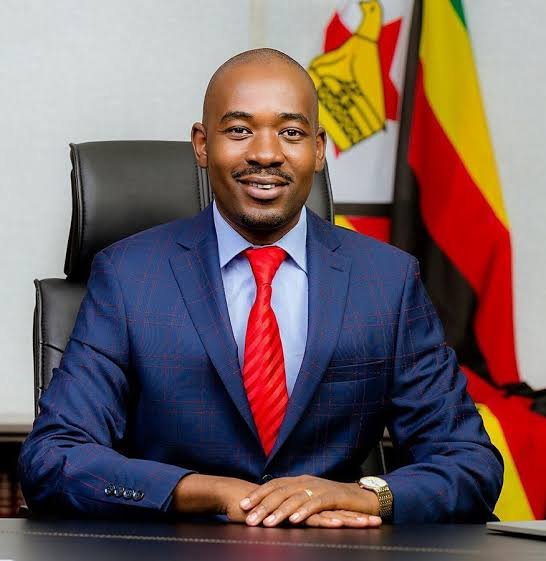
Factionalism is deepening within the Citizens Coalition for Change (CCC) faction aligned to former party leader Nelson Chamisa, with insiders linking the turmoil to speculation that he is preparing to unveil a new political movement.
Sources say the CCC grouping led by Jameson Timba is in the throes of bitter internal disputes, as members jostle for influence and proximity to Chamisa ahead of what many believe will be his formal announcement of a fresh political platform. The CCC, formed in January 2022 as an electoral alternative to the ruling Zanu-PF, splintered after Chamisa’s shock resignation last year. Since then, the opposition landscape has fractured into at least three camps: one led by self-declared secretary-general Sengezo Tshabangu, another under veteran politician Welshman Ncube, and a third claiming loyalty to Chamisa under Timba’s stewardship.
Within the Timba-led faction, the atmosphere has reportedly turned chaotic. Party insiders describe heated exchanges, public confrontations, and an escalating war of words among members. Some activists have gone so far as to accuse rivals of being “Zanu-PF proxies” posing as Chamisa loyalists. The feuds have spilled beyond closed-door meetings, playing out openly on social media platforms such as WhatsApp and X (formerly Twitter), where private conversations are being leaked and members trade accusations in an effort to undermine each other’s credibility.

“The infighting is about who will be closest to Chamisa when he unveils his next political project,” said one source familiar with the tensions. “People are positioning themselves for influence, but it’s turning ugly.”
The stakes appear particularly high for CCC legislators and councillors who survived Tshabangu’s controversial recall process last year. These remaining officeholders have become prime targets in the factional battles, with detractors accusing some of secretly siding with Tshabangu and even Zanu-PF, despite their public declarations of loyalty to Chamisa.
One flashpoint has been a WhatsApp group called CNA Social, which includes prominent CCC supporters, former MPs, councillors, and party leaders. In recent weeks, members have clashed over a proposed “exclusion strategy” aimed at sidelining those deemed political sellouts. Critics of the idea were removed from the group, prompting accusations that certain members were exploiting Chamisa’s name to silence dissent and impose their views on grassroots structures.
Factional Tensions Grip Chamisa-Aligned CCC Camp Amid Speculation of New Political Movement
“We have people who come to our provinces without our knowledge and impose their will,” read one widely circulated message among CCC activists. “The most painful thing is that the people who are silencing others were not elected by us. They do so lying and abusing the name of our leader.”
Timba, when contacted, defended the party’s official communication channels, saying they were governed by established rules. However, he acknowledged that members retain the right to free expression in personal spaces.
“People have freedom of speech. How do I stifle that when it is what I am fighting for?” Timba said.
Meanwhile, Chamisa has maintained a deliberate silence regarding his political intentions. His refusal to clarify his next move has fuelled intense speculation within opposition ranks and beyond. According to sources close to his inner circle, preparations for a new political entity are already in advanced stages, with plans to unveil it in the coming months.
Political analysts say the infighting within Timba’s camp is symptomatic of a wider scramble for political relevance, as individuals manoeuvre to secure their place in what could become Zimbabwe’s next major opposition force. For many, proximity to Chamisa is viewed as a ticket to future political opportunity — and possibly parliamentary or local government positions — in the event his new platform contests upcoming elections.
The growing discord, however, raises concerns about whether Chamisa will be able to unite his supporters under a single banner when he eventually re-enters the political arena. The CCC’s brief history has been marked by internal power struggles, and observers warn that without decisive leadership, the same divisions could plague any new political initiative.
Some fear the public squabbling could erode public confidence in the opposition’s ability to challenge Zanu-PF effectively. “If the opposition looks disorganised, it hands the ruling party a political advantage,” one analyst noted. “Chamisa will need to act quickly to contain the infighting if he hopes to launch a strong and credible alternative.”
As the political chessboard shifts, CCC members and the broader opposition community are waiting to see whether Chamisa will break his silence. For now, his name remains both a unifying symbol for his loyalists and a lightning rod for those seeking political leverage.
What is clear is that the factional tension is more than a passing squabble — it is a sign of a larger battle for influence, identity, and survival within Zimbabwe’s fractured opposition. Whether Chamisa’s anticipated move will heal these divisions or deepen them remains an open question.
Source- Bulawayo24
-

-

-

-

-

-

-

-

-

-

