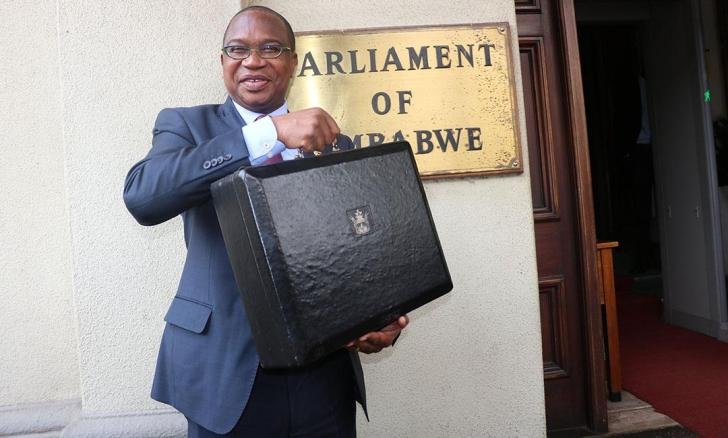
Mthuli Ncube Pledges to Reduce Business Operating Costs

Zimbabwe’s economy is on track to meet its 6% growth target for 2025, Finance, Economic Development and Investment Promotion Minister, Professor Mthuli Ncube, declared on Thursday as he presented the 2025 Mid-Term Budget and Economic Review Statement in Parliament.

The review, which evaluated the performance of the over ZiG$270 billion 2025 National Budget, showcased notable improvements in key sectors of the economy, with the minister pledging to strengthen policy measures that reduce the cost of doing business and enhance competitiveness.

“Given the positive economic developments during the period January to June,” Mthuli Ncube said, “we are confident that the projected economic growth of 6% as outlined in the 2025 National Budget is achievable. All sectors are expected to post positive growth, buoyed by a favourable agricultural season, improved power supply, and continued exchange rate and inflation stability—despite global headwinds and falling international mineral prices.”

The Mid-Term Review offered a cautiously optimistic snapshot of Zimbabwe’s macroeconomic performance. Mthuli Ncube revealed that government revenue had exceeded ZiG$118 billion, surpassing mid-year targets, while expenditure stood at over ZiG$100 billion, with 35% of the budget disbursed in the first half of the year. The review pointed to strong performances in agriculture, mining, and infrastructure development, attributing success in part to policy reforms introduced over the past two years.

As part of new measures to support enterprise and stimulate further growth, Professor Ncube announced that the government was actively reviewing a wide array of fees, levies, and licensing requirements—all seen as major cost drivers for businesses.

Mthuli Ncube Presents 2025 Mid-Term Budget Review, Vows to Cut Business Costs

“To improve the ease and cost of doing business, the government has commenced a review of the various statutory charges and compliance procedures imposed on companies,” he said. “We are determined to eliminate unnecessary bureaucracy and create a more efficient operating environment.”

In particular, the minister said the tax system would come under renewed scrutiny to eliminate distortions that hinder private sector competitiveness.

“On the fiscal front,” he explained, “we will continue to assess the current tax structure with a view to reducing observed inefficiencies and ensuring that the system provides sufficient support for industrial growth and private sector-led development.”

Professor Mthuli Ncube emphasized that economic stability—a key government goal since the introduction of the Zimbabwe Gold (ZiG) currency—remains a non-negotiable pillar of policy.

“Mr. Speaker Sir,” Mthuli Ncube told Parliament, “the country has experienced relative economic stability throughout the first half of the year. I want to assure Honourable Members that both the fiscal and monetary authorities are aligned and committed to maintaining this trajectory. There will be no room for policy slippages.”

The minister noted that inflation had remained subdued following the introduction of the ZiG, and the foreign exchange market had stabilized, supported by strong performance in the formal sector and improved investor confidence. Continued foreign currency generation from mineral exports and diaspora remittances had also helped bolster reserves.

Despite these gains, Mthuli Ncube acknowledged that global economic uncertainty, coupled with declining commodity prices, would require Zimbabwe to remain vigilant and adaptable. However, he said government interventions—especially those aimed at reducing production and compliance costs—would insulate businesses and help sustain the current recovery.

Private sector leaders welcomed the statement but urged the Treasury to fast-track implementation of the reforms. Calls have grown for government to curb local authority levies, simplify tax remittance processes, and streamline licensing for sectors like manufacturing, agriculture, and tourism.

“The steps outlined by the minister are positive,” said an industrialist in Harare, “but we need them to move from policy paper to execution. Businesses are still grappling with high utility costs, regulatory red tape, and slow approvals.”

Looking ahead, Professor Mthuli Ncube said the second half of 2025 would focus on consolidating gains made so far, accelerating infrastructure projects, boosting social protection, and creating a more enabling environment for job creation and investment.

He also reaffirmed the government’s commitment to macroeconomic discipline ahead of the 2026 Budget: “Our reform agenda is clear. We will continue to balance fiscal prudence with inclusive growth.”

As Zimbabwe seeks to transform into an upper-middle-income economy by 2030, Thursday’s review underlined the importance of a stable and investor-friendly environment—key conditions for unlocking long-term growth.

The minister concluded with a call for unity of purpose: “Economic recovery is not the work of government alone. It requires the combined efforts of policymakers, the private sector, and citizens alike.”

Exit mobile version