
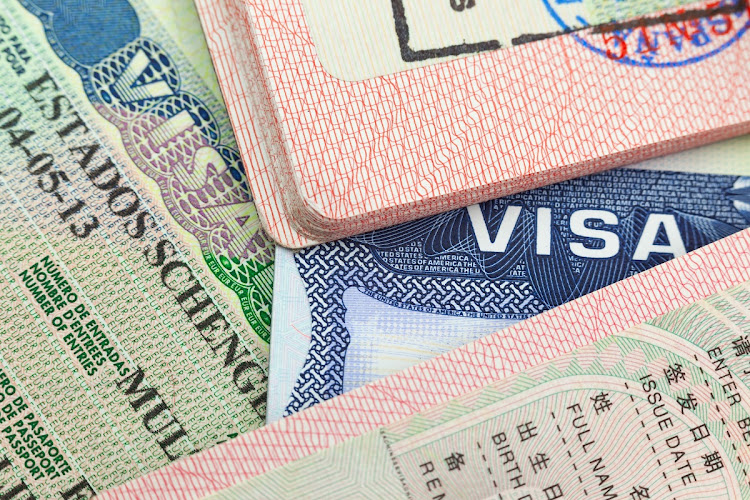
Zimbabweans seeking immigrant visas to the United States will now have their applications processed in South Africa rather than in Zimbabwe, following new guidelines issued by the US Department of State. The changes, which take effect on November 1, mark a significant shift in consular services for Zimbabweans, many of whom will now be required to travel to Johannesburg for mandatory interviews.
Under the new system, applicants must attend their visa interviews either in the consular district of their country of residence or, in some cases, in their country of nationality if specifically requested. For Zimbabweans, this means the U.S. Consulate General in Johannesburg will now serve as the designated processing center for all immigrant visa cases. The National Visa Center (NVC), which coordinates scheduling, will automatically allocate Zimbabwean applicants to Johannesburg going forward.
The U.S. Department of State explained that the move is part of a wider effort to streamline operations and better align consular workload across the region. Officials emphasized that while the change may bring logistical challenges for applicants, the system is designed to ensure consistency and efficiency in handling applications.
For applicants who already have scheduled appointments, the Department of State indicated that these will generally remain unchanged. However, individuals who wish to transfer their case from one post to another will no longer be able to approach U.S. consulates directly. Instead, all such requests must be made through the NVC, which will evaluate and process them in accordance with the new policy.
This procedural adjustment is aimed at reducing confusion and duplication of effort among different consular posts. By centralizing transfer requests, authorities believe the process will be more transparent and predictable.
U.S. Shifts Zimbabwean Immigrant Visa Processing to Johannesburg
Despite the broad application of the new policy, the Department of State has provided for certain exceptions. In cases involving humanitarian needs, urgent medical circumstances, or matters of foreign policy, applicants may be granted waivers allowing their cases to be handled outside of the newly designated post. Such exceptions will be assessed on a case-by-case basis.
This provision may prove particularly important for Zimbabweans facing difficulties in traveling to South Africa due to health conditions, financial constraints, or legal restrictions. It also reflects the U.S. government’s recognition of the potential hardship the new system could impose on some applicants.
The policy change will also extend to winners of the Diversity Visa (DV) Lottery Program. For the upcoming DV-2026 program year, Zimbabwean applicants who are selected must prepare to attend their visa interviews in Johannesburg rather than in Harare.
The Diversity Visa Program, which grants up to 55,000 immigrant visas annually to individuals from countries with historically low immigration rates to the U.S., is particularly popular in Zimbabwe. Thousands of Zimbabweans apply each year, and many will now have to budget for cross-border travel as part of the process.
Authorities have strongly advised all visa applicants to remain up to date by regularly checking the websites of U.S. embassies and consulates. These platforms provide critical information about services, operating status, documentation requirements, and health protocols that may affect interview attendance.
In addition, applicants are encouraged to carefully review their scheduling notices from the NVC to confirm the location of their interview and any additional steps required to complete their applications. Those considering requests for exceptions are advised to prepare supporting documentation early, given the strict criteria and the potential time required for review.
The decision has generated discussion among Zimbabwean immigration lawyers and applicants, many of whom see the change as adding another layer of cost and complexity to an already demanding process. Traveling to Johannesburg involves expenses for transport, accommodation, and sometimes visas, depending on the applicant’s documentation status.
Some observers note that the move could disproportionately affect applicants from rural areas or those with limited financial means, who may struggle to afford the additional travel requirements. Advocacy groups have already called for the U.S. to ensure that humanitarian exceptions are applied generously in cases of genuine need.
At the same time, others argue that the consolidation of services in Johannesburg could help improve efficiency, given the larger capacity and more extensive infrastructure of the U.S. Consulate there compared to Harare. The Johannesburg post has long handled a significant share of regional immigrant visa applications and is equipped with facilities that may speed up the process once applicants reach the interview stage.
For Zimbabweans planning to migrate to the United States, the new policy represents a shift that will require additional planning and resources. With implementation set for November 1, prospective applicants are being urged to act quickly in understanding the new requirements, confirming their interview locations, and making necessary travel arrangements.
As the U.S. government continues to adjust its global consular operations, Zimbabweans seeking greener pastures abroad will have to adapt to these changes. Whether the move ultimately makes the visa process more efficient or simply more burdensome will likely become clear in the months after the new system takes effect.
source- Bulawayo24
-

-

-

-
-

-

-
-

-

-

