
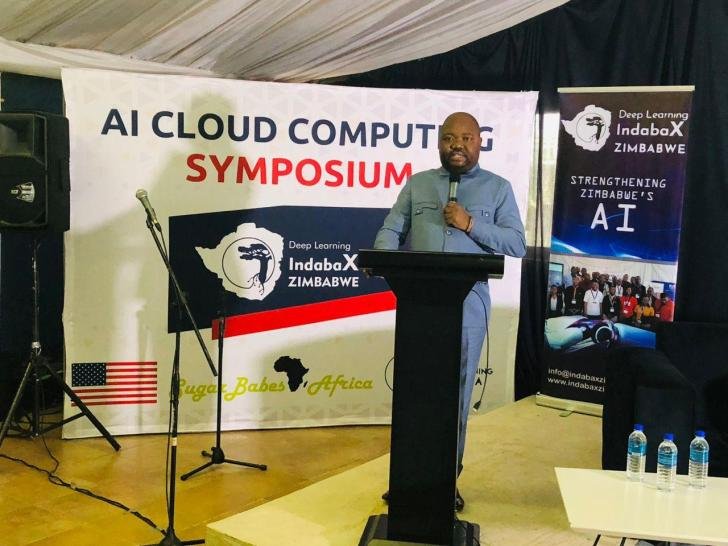
Zimbabwe is taking a major step towards modernising its education system, with plans to introduce Artificial Intelligence (AI) learning in schools as part of a wider push to prepare young people for a rapidly evolving digital world.
The initiative is a joint effort between the Ministry of Information Communication Technology, Postal and Courier Services and the Ministry of Primary and Secondary Education. It was announced by ICT Deputy Minister Dingumuzi Phuti during the IndabaX AI Symposium held in Harare on Thursday.
The symposium, themed “From Ground to Cloud: Powering Zimbabwe’s Future with Innovative AI Applications”, brought together government officials, academics, technology innovators, and development partners. Discussions centred on the role of AI and trusted cloud infrastructure as catalysts for national development.
Deputy Minister Phuti told delegates that the government is committed to equipping learners with digital skills from an early age, shifting their role from passive technology users to active developers and innovators.
“We are working with the Ministry of Primary and Secondary Education to introduce compulsory training in AI, coding, and robotics from as early as primary school,” he said. “The goal is to ensure that Zimbabwean learners are not just consumers but creators of AI-driven solutions.”
Phuti explained that the move is part of a broader government strategy to align Zimbabwe’s education system with global technological trends, ensuring future generations can thrive in the digital economy. By embedding AI education early in the curriculum, he said, the country can cultivate a generation of problem-solvers, engineers, and tech entrepreneurs.
The Deputy Minister also highlighted existing government-led programmes that are helping young people gain hands-on experience with emerging technologies. These include the Government Experience and Exchange Program, which offers Zimbabwean youth practical training in AI, coding, data science, and other digital skills, alongside exposure to global best practices.
“In parallel, we are scaling up our free AI and digital skills programs,” Phuti said. “These initiatives are designed to give our young people the practical tools they need to compete in a technology-driven job market.”
Zimbabwe to Introduce Artificial Intelligence Learning in Schools
Phuti stressed the urgency of making digital literacy a core component of education, on par with reading, writing, and arithmetic.
“In today’s world, digital skills are not a luxury — they are literacy,” he said. “Our goal is to create a populace not just literate in digital skills, but fluent in the language of the future.”
He added that the government’s vision is to see every child in Zimbabwe capable of not only using digital tools but also creating innovative solutions that address local and global challenges.
Zimbabwe’s AI education initiative reflects a growing trend across Africa and the world. Countries like Rwanda, Kenya, and South Africa have already begun incorporating coding, robotics, and AI concepts into their school systems, recognising the technology’s potential to shape future industries.
Globally, AI is being used in classrooms to personalise learning, automate administrative tasks, and provide real-time feedback to students. Such tools can adapt lessons to individual strengths and weaknesses, helping learners progress more efficiently while freeing up teachers to focus on higher-value instruction.
By embracing AI in education, Zimbabwe aims to position itself as a regional leader in technology-driven learning, producing graduates who can compete in the global economy.
However, the introduction of AI into schools will require significant investment in infrastructure, especially in rural areas where electricity supply and internet connectivity remain limited. Without addressing these gaps, there is a risk of widening the digital divide between urban and rural learners.
Officials have acknowledged these challenges and say part of the AI rollout will include expanding ICT infrastructure in disadvantaged schools. Partnerships with private companies, NGOs, and development agencies are being explored to help fund devices, connectivity, and teacher training.
The IndabaX AI Symposium served as a platform for dialogue between government, academia, and the private sector. Stakeholders discussed ways to integrate AI into various aspects of society, from agriculture and health to finance and education, while ensuring that ethical considerations such as data privacy and algorithmic fairness are prioritised.
Phuti urged continued collaboration, noting that building a tech-savvy nation will require contributions from all sectors. “The future of Zimbabwe depends on our ability to innovate together. AI is a tool that, if used wisely, can unlock unprecedented opportunities for our people,” he said.
The planned introduction of AI learning in Zimbabwean schools marks a decisive shift in the country’s approach to education — one that recognises the central role technology will play in economic growth, job creation, and national competitiveness.
For learners, it represents an opportunity to develop skills that will open doors to careers in industries that are only just beginning to emerge. For the country, it is a step towards building a workforce capable of driving technological advancement and solving real-world problems through innovation.
As the plan moves from concept to implementation, the coming years will reveal how effectively Zimbabwe can bridge the gap between ambition and reality — and whether the promise of AI education can be delivered equitably to every child, from Harare to the most remote rural schools.
Source- Bulawayo24
-

-

-

-

-

-

-

-

-

-

