
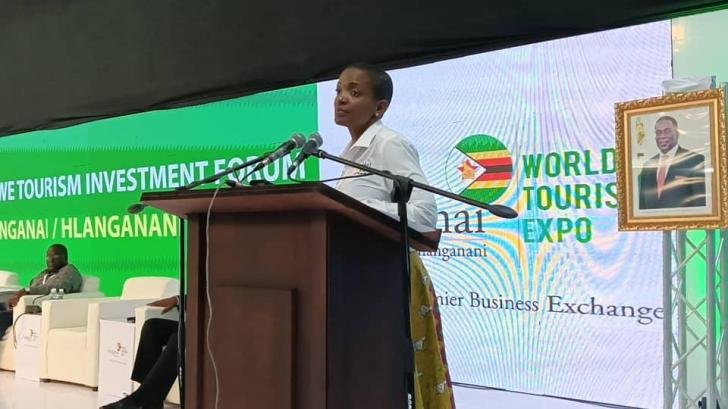
The Ministry of Tourism and Hospitality Industry, under the leadership of Minister Barbara Rwodzi, is facing intense criticism following its decision to relocate the 18th edition of the Sanganai/Hlanganani World Tourism Expo from Bulawayo to Mutare. The move has drawn widespread concern over escalating costs and allegations of self-enrichment among ministry officials.
Scheduled for September 10–12, the Sanganai/Hlanganani Expo has historically been held at the Zimbabwe International Trade Fair (ZITF) grounds in Bulawayo, a venue known for its robust infrastructure capable of accommodating large-scale international events. Hosting the event in Bulawayo typically costs between US$500,000 and US$700,000, covering exhibition halls, meeting rooms, catering, internet services, and accommodation for hundreds of exhibitors. This year, however, the event will take place in Mutare, with temporary facilities being constructed at the Mutare Country Club and surrounding Central Business District. The relocation has reportedly pushed projected expenses into the millions, raising eyebrows among tourism insiders.
Senior government sources allege that Tourism Minister has exceeded her legal mandate by taking direct control of operations that fall under the purview of the Zimbabwe Tourism Authority (ZTA). Established under the Tourism Act (Chapter 14:20), the ZTA is charged with regulating and developing Zimbabwe’s tourism sector, including managing national events such as the Sanganai/Hlanganani Expo.
“ZTA is supposed to run the event independently, but the minister has now intervened in virtually all aspects, including the management of the Zimbabwe Tourism Fund, which is legally reserved for the statutory authority,” a government insider explained.
Critics argue that the move to Mutare was motivated less by tourism development and more by opportunities for financial gain. Allegations have emerged that the relocation will benefit ministry officials and associated business partners through lucrative contracts for infrastructure, equipment, and services.
“Shifting the expo to Mutare adds no tangible value to the tourism sector; it is purely about creating avenues for personal enrichment,” said a senior tourism ministry official who requested anonymity. “The expenses are being downplayed, but the real beneficiaries will be insiders and their associates.”
Zimbabwe Tourism Minister Faces Backlash Over Controversial Expo Relocation
Preparations for the Mutare edition have included significant logistics planning. Reports indicate that a ZTA procurement team traveled to China in July to source containers, tents, chairs, and other materials required for constructing temporary facilities. Organizing an international expo at a new site demands extensive infrastructure and logistical support, from sanitation and security to accommodation and internet connectivity.
Observers also note that the controversial relocation coincides with the launch of the National Tourism and Hospitality Policy (2025–2030), designed to grow Zimbabwe’s tourism sector into a US$10 billion industry by 2030. Some critics contend that the policy has effectively given Minister Rwodzi sweeping powers to influence tourism development, sidelining the ZTA in the process.
The Sanganai/Hlanganani Expo, formerly known as the Zimbabwe International Travel Expo (Shanyai/Vakatshani), began in 2008 and was originally hosted in Harare. In 2015, the event was moved to Bulawayo, with organizers citing cost efficiency and superior infrastructure at ZITF. Local stakeholders now argue that the Bulawayo venue was both practical and financially prudent.
“Bulawayo was the logical choice. Everything was already in place for hosting an international expo. The decision to move to Mutare appears political, rather than economic. It’s about where officials can benefit personally,” said a tourism analyst familiar with the situation.

The announcement has sparked concern among exhibitors and tourism professionals, who fear that the high costs and temporary nature of Mutare’s facilities could undermine the event’s overall impact. Critics warn that if unchecked, such practices could erode the credibility of Zimbabwe’s tourism sector and discourage future investment.
Attempts to reach Tourism Minister Rwodzi for comment were unsuccessful at the time of publication. Meanwhile, stakeholders are calling for transparency in the use of public funds and a clear rationale for the relocation, emphasizing the need to prioritize sector development over political or personal interests.
As Zimbabwe approaches the 18th Sanganai/Hlanganani Expo, the controversy surrounding its relocation to Mutare underscores broader challenges in governance and accountability within the tourism sector. Observers stress that ensuring events of this magnitude are cost-effective and professionally managed is essential for maintaining both local and international confidence in Zimbabwe’s tourism potential.
Source- Bulawayo24
-

-

-

-

-

-

-

-

-

-

