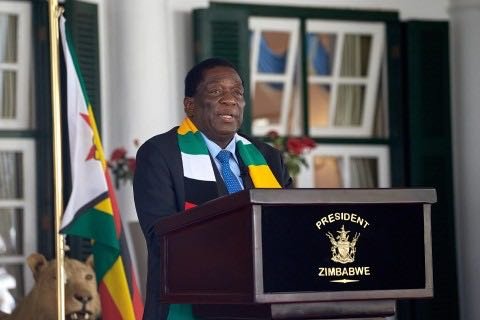
HARARE — Zimbabwean President Emmerson Mnangagwa has announced that he will not seek re-election in the 2028 national elections, signaling a clear end to his current term in office. The statement comes amid calls from some quarters of his party, Zanu-PF, urging him to extend his stay in power, but the President has maintained that the constitutional timeline will be respected.
The announcement was made during a recent Zanu-PF central committee meeting, where Mnangagwa surprised party members by affirming that the next general elections will take place as scheduled in 2028. The move marks a significant moment in Zimbabwe’s political landscape, providing clarity on the succession timeline and quelling speculation about any attempts to postpone the electoral process.
Earlier this year, the party faced internal tensions when war veterans leader Blessed Geza called on Mnangagwa and his allies to abandon efforts to delay elections to 2023. Geza, who is associated with Vice-President Constantino Chiwenga’s faction, was subsequently expelled from Zanu-PF and is now reportedly in hiding. His expulsion highlighted the factional divides within the party, as debates over election timing and leadership succession intensified.
Political analysts suggest that Mnangagwa’s decision not to contest in 2028 may have been influenced by pressure from Chiwenga’s camp, reflecting the delicate balance of power within Zanu-PF. One analyst, speaking on condition of anonymity, noted that the President’s announcement indicates a recognition of both constitutional obligations and internal party dynamics.
Zimbabwe’s Constitution mandates that general elections be held every five years, a provision that Mnangagwa has now confirmed will be upheld. Observers say that adherence to this schedule reinforces the country’s commitment to democratic processes, despite ongoing political challenges and debates over governance.
Mnangagwa’s decision is expected to shape the trajectory of Zimbabwe’s political landscape over the coming years. With the President stepping aside in 2028, attention is likely to turn to potential successors within Zanu-PF, as well as opposition parties positioning themselves for the upcoming elections. Analysts believe that the clarity provided by Mnangagwa’s announcement will help stabilize political expectations and reduce uncertainty among voters and stakeholders.
President Mnangagwa Confirms He Will Not Contest 2028 Elections
The President’s stance also sends a message to both domestic and international audiences about Zimbabwe’s commitment to constitutional norms. In recent years, the timing of elections and debates over presidential terms have been points of contention, attracting scrutiny from civil society groups and international observers. By confirming that he will not contest the next elections, Mnangagwa is reinforcing the principle that leadership transitions should occur according to established legal frameworks.
Zanu-PF officials have welcomed the announcement, framing it as a demonstration of the party’s adherence to democratic principles and respect for the rule of law. Party spokespersons have reiterated that the party remains focused on national development priorities while preparing for the upcoming electoral cycle.
Meanwhile, opposition parties are likely to view the President’s decision as an opportunity to increase their influence and mobilize support ahead of 2028. Political commentators anticipate a highly competitive electoral environment, as both Zanu-PF and opposition movements position themselves to appeal to voters in key constituencies across the country.
For ordinary Zimbabweans, Mnangagwa’s announcement may provide reassurance about the continuity of governance and the predictability of the electoral calendar. Citizens who have closely followed debates over term limits and election timing can now anticipate a clearer timeline for political engagement and participation.
The President’s decision not to run in 2028 also underscores the evolving nature of Zimbabwean politics, where internal party dynamics, constitutional requirements, and public expectations intersect. As the country approaches the next general elections, attention will remain focused on how Zanu-PF manages the leadership transition and how opposition parties strategize to capitalize on the electoral opportunity.
In summary, Mnangagwa’s confirmation that he will not contest the 2028 elections represents a pivotal moment for Zimbabwe. By adhering to the constitutional mandate and addressing internal party pressures, the President has provided clarity on the nation’s political path forward. This decision is likely to influence the strategies of political actors, the engagement of voters, and the overall stability of Zimbabwe’s democratic processes as the country looks ahead to the next electoral cycle.
Source- enca
-

-

-

-

-

-

-

-
-

-