
The Supreme Court has handed a decisive victory to ferrochrome producer Zimasco (Pvt) Ltd in its long-running legal battle with the Zimbabwe Revenue Authority (Zimra), dismissing an appeal lodged by the tax authority over the payment of mining royalties.
In a ruling delivered this week, in the supreme court Justices Chinembiri Bhunu, George Chiweshe, and Joseph Musakwa upheld an earlier High Court decision that chrome ore concentrates and ferrochrome alloy are not classified as minerals, and therefore do not attract mining royalties. The apex court found that Zimra’s arguments had no merit and ordered the authority to pay the costs of the appeal. Full written reasons for the judgment will be issued at a later date.

Reading out the decision, the bench noted that the lower court had correctly applied the law.
“In light of the foregoing, it is manifest that the appeal lacks merit. The court a quo correctly interpreted the governing statutory provisions. It correctly characterised ferrochrome as a non-mineral, and correctly concluded that in the absence of a prescribed royalty rate for mineral-bearing products during the relevant period, no liability to pay royalties could arise,” the justices said.
Advocate Thabani Mpofu Scores Another Supreme Court Victory
This ruling means Zimasco, a Midlands-based company owned by Chinese state-run giant Sinosteel, will not be required to pay royalties for chrome ore concentrates and ferrochrome sold between January 2019 and September 2022.
The dispute originated when Zimra sought to collect royalties from Zimasco on the basis that its processed chrome products should be treated as minerals. Zimasco challenged this interpretation at the High Court, arguing that both chrome ore concentrates and ferrochrome are “mineral-bearing products” rather than raw minerals.
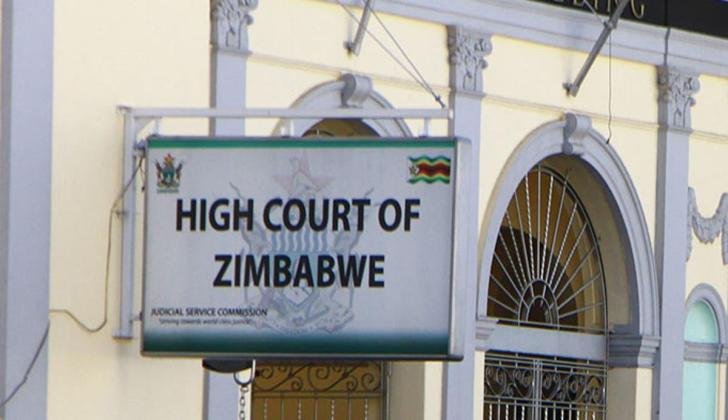
Justice Paul Musithu, who presided over the High Court case, sided with Zimasco. He ruled that prior to January 2022, the Minister of Mines and Mining Development had not prescribed royalty rates for mineral-bearing products. As a result, companies such as Zimasco were not legally obliged to pay royalties on such products.
“The applicant (Zimasco) did not sell the chromite ore that it extracted from the earth. Prior to January 2022, the Minister had not fixed rates of royalties in respect of mineral-bearing products, and for that reason the applicant was not obliged to pay royalties for the chrome ore concentrates and ferrochrome alloy which it disposed during the period 1 January 2019 to 30 September 2022,” Justice Musithu ruled.
He further emphasised that while the law clearly stipulated royalty rates for minerals, it was silent on mineral-bearing products. In his view, Zimra had no legal basis to extend existing provisions to cover ferrochrome or concentrates.
Zimasco had sought a declaratur affirming that its products were outside the scope of mineral royalty laws and that any attempt by Zimra to impose such levies was unlawful. The company argued that classifying ferrochrome as a mineral would blur the distinction between raw minerals and processed products, creating legal and financial uncertainty.
Zimra, represented by lawyer Simplicio Bhebhe, countered that the products should be treated as minerals for the purposes of royalty payments, insisting that allowing companies to exclude such products would deprive the state of vital mining revenue.
However, the supreme court have now twice rejected Zimra’s interpretation.
Zimasco was represented by Advocate Thabani Mpofu, who has been involved in several high-profile Supreme Court victories. Mpofu argued that Zimra was attempting to usurp the powers of the Minister of Mines by unilaterally imposing royalties where no legal basis existed.
The Supreme Court decision is seen as a landmark judgment for Zimbabwe’s chrome mining industry. It provides clarity on a contentious issue that has major financial implications for mining companies and the tax authority alike.
For miners, the ruling removes the risk of being saddled with retrospective royalty obligations on processed products, which could have amounted to millions of dollars. For Zimra, however, the judgment represents a setback in its efforts to expand the tax base and increase revenue collection at a time when government finances remain under strain.
Economists note that while the judgment protects mining companies in the short term, it also underscores the importance of updating and clarifying mining legislation. “This case has exposed gaps in the regulatory framework. To avoid similar disputes in the future, in the supreme court there must be clearer statutory definitions of what attracts royalties,” said one Harare-based analyst.
The ruling may also prompt the government to tighten laws around mineral royalties going forward. Indeed, since January 2022, the Minister of Mines has prescribed rates for mineral-bearing products, closing the legal loophole that Zimasco successfully relied on in its case.
The Supreme Court’s dismissal of Zimra’s appeal in the supreme court marks the end of a protracted legal battle that has been closely watched by mining companies, tax experts, and policymakers. For Zimasco, it is a major relief that lifts a potential financial burden stretching back several years.
For the wider mining sector, the case sets a precedent on how processed mineral products are treated under Zimbabwean law, at least for the period before royalty rates were formally extended to cover them.
As the government continues to seek ways to increase revenue from the country’s vast mineral wealth, this judgment highlights the need for greater legal certainty and consistency in the regulation of the mining industry.
Source- byo24
-

-

-

-

-

-

-

-

-

-

