
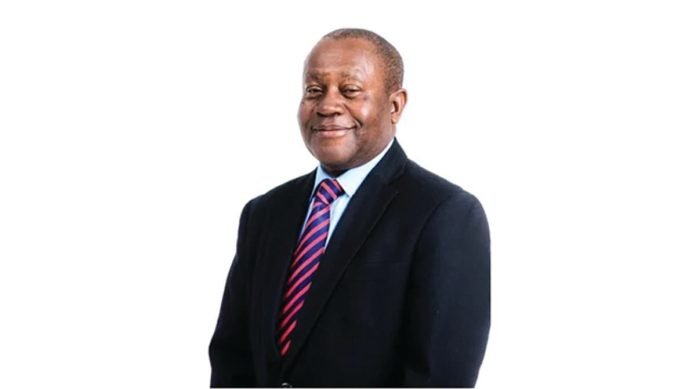
Zimbabwe has lost one of its distinguished diplomats, liberation struggle veterans, and cultural historians following the death of Ambassador Thomas Bvuma. A respected figure in both the diplomatic arena and the literary world, Ambassador Bvuma leaves behind a legacy rooted in service, patriotism, and a lifelong commitment to documenting the history of the country he helped to liberate.
Born and raised in Manicaland, Ambassador Bvuma’s early life was shaped by a strong academic foundation. He attended St Augustine’s School in Penhalonga, one of the region’s most prominent institutions, before advancing to the then University of Rhodesia. It was during his second year of university studies that he made the pivotal decision to join the liberation struggle, a move that would redirect the course of his life and embed him permanently in the national story.
In 1976, he left the country and crossed into Mozambique, arriving at Doroi Refugee Camp as thousands of young recruits poured into training bases to support the intensifying Second Chimurenga. Like many of his generation, he was driven by a conviction that true independence required sacrifice, and he embraced the rigours and uncertainties of life in exile. Not long after his arrival, he was transferred to Chimoio Military Base, where he underwent politico-military training under the leadership structures of ZANU.
His potential soon became evident. Ambassador Bvuma was selected to receive advanced ideological training at the Chitepo Ideological College, an institution established to instil political clarity, revolutionary values, and organisational discipline among cadres. The college played a critical role in shaping leaders who would later steer Zimbabwe during and after the liberation war.
Liberation War Veteran and Diplomat Ambassador Thomas Bvuma Dies
As the liberation movement expanded and intensified, the ZANU leadership recognised the need to prepare a new generation of educated cadre who would help build the nation after independence. Through the direction of President Emmerson Mnangagwa, Ambassador Bvuma was identified as one such individual. In 1977, he was sent to Eduardo Mondlane University in Maputo, where he resumed academic studies even as the war continued to escalate around the region. His academic journey during this turbulent period reflected the movement’s belief that political liberation needed to be accompanied by intellectual and institutional development.
Following independence in 1980, Ambassador Bvuma transitioned from the battlefield to the corridors of government. He first served in the Office of the President and Cabinet as Chief Press Officer, a role that required strategic communication skills, political insight, and the ability to articulate government policy during the formative stages of nationhood. His contributions in this office helped shape early state messaging and supported the work of senior leadership during a critical period of reconstruction.
He later joined the Ministry of Foreign Affairs and International Trade, beginning a diplomatic career that would take him across continents and place him at the forefront of Zimbabwe’s international engagements. Ambassador Bvuma eventually served as Zimbabwe’s envoy to Brazil, where he became a key figure in the country’s efforts to strengthen global partnerships amid growing international pressure following the land reform programme.
During his tenure in Brazil, he played a significant role in countering the effects of Western-imposed sanctions. One of his most notable achievements was helping to secure the “More Food for Africa” cooperation agreement—a programme through which Brazil supplied Zimbabwe with modern agricultural equipment. The initiative eased the strain caused by sanctions, boosted farming capacity, and supported rural productivity. His work in Brazil earned him recognition for blending diplomatic skill with practical development strategies.
In addition to his diplomatic service, Ambassador Bvuma later held the position of Vice-Chairman of the Zimbabwe Broadcasting Corporation (ZBC), his final public appointment. His role at ZBC reflected his long-standing interest in communication and public engagement, dating back to his early post-independence career.
Yet, beyond his public roles, Ambassador Bvuma distinguished himself as a writer committed to preserving the memory of the liberation struggle. He was among the few published authors who documented the war from firsthand experience. His most recent historical work, The Chosen Generation, was launched last year by the Institute of African Knowledge/Museum of African Liberation, adding to national archives of liberation history. This book complemented his earlier literary contribution, the poetry collection The Tale That Turns, which explored themes of struggle, resilience, and the emotional landscape of wartime experiences.
Ambassador Thomas Bvuma’s passing marks the departure of a man who served Zimbabwe in multiple capacities—soldier, diplomat, communicator, and storyteller. His legacy will endure through the institutions he strengthened, the history he documented, and the national values he championed throughout his life.
Source- ZBC
-

-

-

-

-

-

-

-

-

-

