
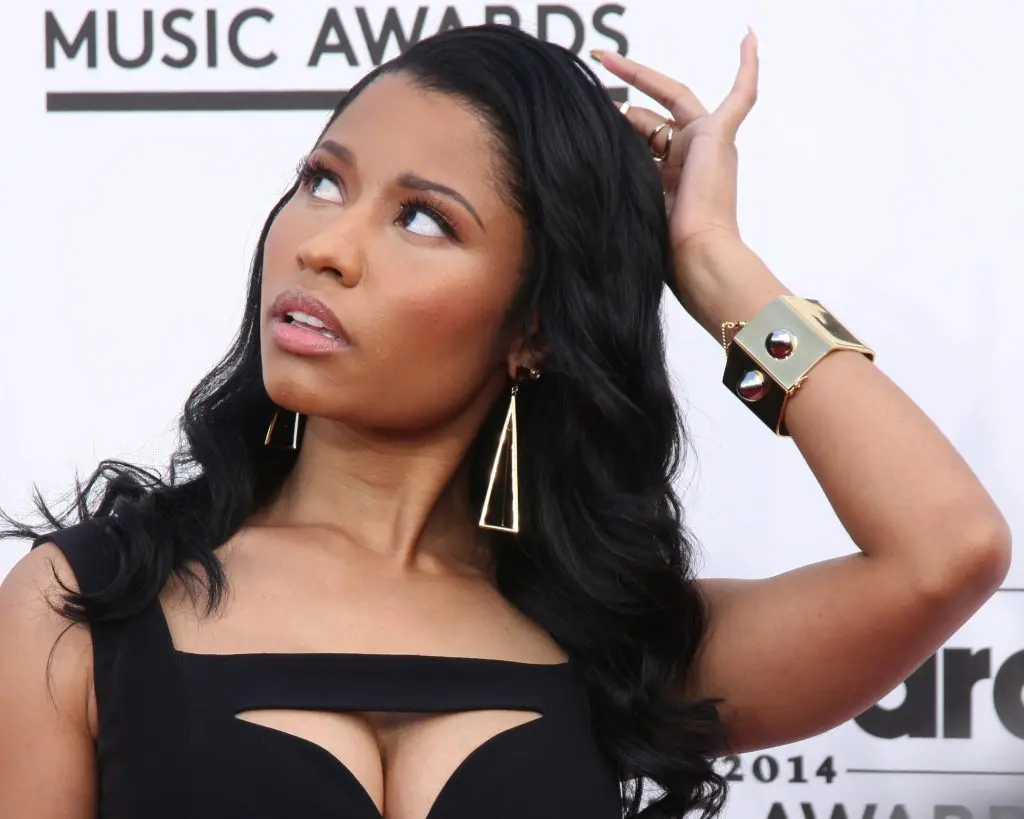
Nicki Minaj has long been celebrated as a master of duality — a rapper whose lyrical dexterity and flamboyant persona coalesce into a brand both larger-than-life and deeply personal. From the glittering spectacle of her performances to the raw edge of her verses, she has maintained a devoted following of “Barbz” while navigating controversies that range from playful feuds to scathing cultural critiques. Yet, in recent weeks, her social media presence has shifted from a playground of bravado to a flashpoint where religion, politics, and cultural identity collide.
The latest controversy erupted when Nicki Minaj reposted a Truth Social message from former U.S. President Donald Trump, highlighting a claim that Christians in Nigeria were “facing an existential threat.” Alongside the repost, she expressed “a deep sense of gratitude” for living in a country where people can freely worship God. While intended as a reflection on religious freedom, the post immediately sparked debate among her followers, creating an unexpected cultural and political fault line.
Even her most loyal fans — who had defended her through past spats, including inflammatory remarks aimed at Cardi B’s child — reacted with unease. For many, the post suggested an alignment with a political figure whose rhetoric is polarizing, raising questions about Minaj’s platform and her influence over a diverse, global fanbase.One fan captured the tension in a now-public exchange:
“Nicki Minaj, as a die-hard fan… you cozying up to this f—ing loser, I might actually have to tap out. We live in a country that wants to weaponize religion so YOUR GAY FANS can be pushed into a corner and silenced.”
Nicki Minaj, known for her sharp rebuttals, responded with righteous indignation, asserting that her advocacy for persecuted Christians was not intended as a political statement against any segment of her audience:
“Imagine hearing that Christians are being MURDERED & making it about you being gay. I’ll advocate for you the same way that I’m advocating for MURDERED CHRISTIANS IN NIGERIA. Like I always have. Just remember that. Diligently. Compassionately. Just remember that part, too!!!!”
She further questioned the authenticity of the fan’s loyalty and threatened to block him, demonstrating her willingness to defend her beliefs vigorously while maintaining control over her social media narrative.
Nicki Minaj Navigates Controversy at the Crossroads of Faith, Politics, and Cultural Identity
The situation escalated when Mike Waltz, then-U.S. ambassador to the United Nations, publicly extended an invitation to Minaj to discuss global religious freedom efforts. Capitalizing on the moment, she announced the invitation to her followers in her trademark blend of theatricality and spectacle:
“The first female rapper in history to receive an invitation to the United Nations. COME ON BARBZ, LET’S MAKE AMERICA GAG AGAIN.”
The statement fused personal achievement with political messaging, highlighting Minaj’s ability to command attention while navigating complex topics. Yet, the stunt also underscored the growing tension between celebrity culture and the political weight of social media influence.
Nicki Minaj’s defense emphasizes her personal convictions and desire to advocate for marginalized communities, in this case persecuted Christians abroad. To her, the issue is a humanitarian concern transcending domestic politics. However, critics argue that her reach as a global cultural figure necessitates a more nuanced understanding of how her endorsements and reposts reverberate among millions of followers, including vulnerable populations like LGBTQ+ fans.
This controversy exposes a broader cultural dynamic: the collision of faith, identity, and celebrity influence in an era where social media magnifies every post. Minaj’s career has been built on controlling both image and narrative, yet this episode reveals the limits of that control in a hyper-connected digital landscape.
Supporters defend her right to voice her beliefs, framing the debate as a matter of personal conviction and freedom of expression. Detractors, however, insist that public figures with immense cultural capital must account for the downstream impact of their platforms, recognizing that even well-intentioned advocacy can be interpreted politically or culturally.
Nicki Minaj’s response — pledging continued advocacy while asserting compassion and diligence — reflects an attempt to reconcile personal belief with public responsibility. Whether these assurances will appease concerned fans remains uncertain.
For Nicki Minaj, this moment represents more than just another social media controversy. It signals a shift in her career from controlling narrative to negotiating accountability, as a portion of her audience now demands she consider the political and cultural consequences of her online choices. In doing so, Minaj is navigating uncharted territory, balancing her faith, activism, and celebrity in a world where every post can carry both personal meaning and global impact.
Source- Rollingout
-

-

-

-

-

-

-

-

-

-

