
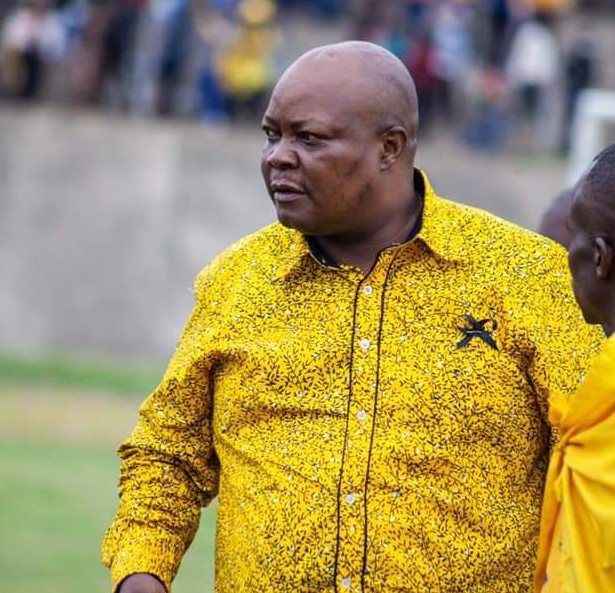
Pretoria, South Africa – Zimbabwean opposition politician Job Sikhala has been released on bail in Pretoria, a week after his arrest for allegedly travelling in a vehicle containing explosive materials. The arrest, which also involved co-accused Alexander Thema, has raised alarm among human rights advocates and political observers who warn that Zimbabwean authorities may be extending their repression of dissent beyond national borders.
Sikhala’s detention comes in a tense political climate in Zimbabwe, marked by increasing unrest and growing opposition to President Emmerson Mnangagwa’s administration. Just days prior to his arrest, Sikhala and other opposition leaders had gathered at the Sapes Trust building in Harare, condemning the bombing of the centre by unknown assailants. The gathering also served as a platform to denounce Mnangagwa’s alleged bid to extend his rule to 2030, a move critics argue would further entrench authoritarianism in the country.
The press conference at the Sapes Trust was forcibly dispersed by police, with opposition figures describing the action as an aggressive attempt to stifle dissent. Following these events, Sikhala’s arrest in South Africa has added fuel to concerns about cross-border targeting of political opponents, with many questioning the involvement of Zimbabwean operatives or allied networks in influencing foreign law enforcement.
Wurayayi Zembe, head of political affairs at the National Democratic Working Group—a movement founded by Sikhala—claimed the ruling Zanu-PF party orchestrated the arrest as part of a broader campaign against political opposition. “Certainly, the Zanu-PF party and the regime have developed a political vendetta and personal hatred against advocate Job Sikhala,” Zembe told The Continent, highlighting what he described as a long-standing pattern of persecution against the politician.
The group’s spokesperson, Silenkosi Moyo, also defended Sikhala, asserting that he had no connection to the explosives allegedly discovered in his vehicle. “We categorically maintain that the explosives found do not belong to him,” Moyo said, framing the arrest as an attempt to criminalize legitimate political activity.
Job Sikhala Released on Bail in South Africa Amid Cross-Border Political Tensions
Human rights campaigners have voiced deep concerns over the implications of Sikhala’s detention. Vivid Gwede, a rights advocate, told The Continent that the case “heightened concerns about cross-border harassment of activists,” framing it as “a new threat to human rights and democracy in Zimbabwe.” Gwede warned that such tactics could create a chilling effect on opposition voices not only within Zimbabwe but also among exiled activists and political organizers operating regionally.
Sikhala’s detention is part of a broader history of persecution. He was released from Chikurubi Maximum Prison in January 2024 after serving more than 18 months for allegedly inciting public violence in connection with the 2022 killing of opposition activist Moreblessing Ali. Prior to his conviction, he had spent over 600 days in pretrial detention—a period that drew widespread criticism from human rights organizations and observers who argued that the charges were politically motivated and aimed at silencing dissent.
The recent arrest in Pretoria has reignited scrutiny of the Zimbabwean government’s treatment of opposition figures, with analysts noting that the timing is significant given the country’s approaching electoral cycle. Observers suggest that the renewed pressure on Sikhala reflects a strategy by state actors to consolidate political control ahead of elections, employing intimidation and legal harassment as tools to weaken opposition movements.
Sikhala’s release on bail in South Africa has provided a temporary reprieve, but it leaves lingering questions about the political climate in Zimbabwe and the safety of opposition figures abroad. Legal experts point out that while bail ensures his temporary freedom, the case may continue to be leveraged as a form of political pressure, keeping Sikhala under constant scrutiny and legal threat.
Political commentators argue that the cross-border dimension of Sikhala’s arrest signals an expansion of the Zimbabwean government’s reach, raising alarm among regional governments and human rights bodies. “This is not merely a domestic issue,” one analyst noted. “It speaks to the growing trend of governments attempting to exert influence over opposition figures even when they are outside their national jurisdiction—a concerning precedent for activists across southern Africa.”
For Sikhala and his supporters, the focus now shifts to preparing a defence and challenging what they describe as a politically motivated case. The National Democratic Working Group has vowed to continue advocacy for his rights while drawing attention to what they describe as the broader campaign of repression against Zimbabwe’s political opposition.
As the investigation continues, Sikhala remains under bail conditions in South Africa, awaiting further court proceedings. For human rights defenders and political observers, his case represents both the resilience of opposition voices and the persistent challenges posed by authoritarian practices, highlighting the high stakes of political activism in Zimbabwe and the region at large.
Source- Continent
-

-

-

-

-

-

-

-

-

-

