
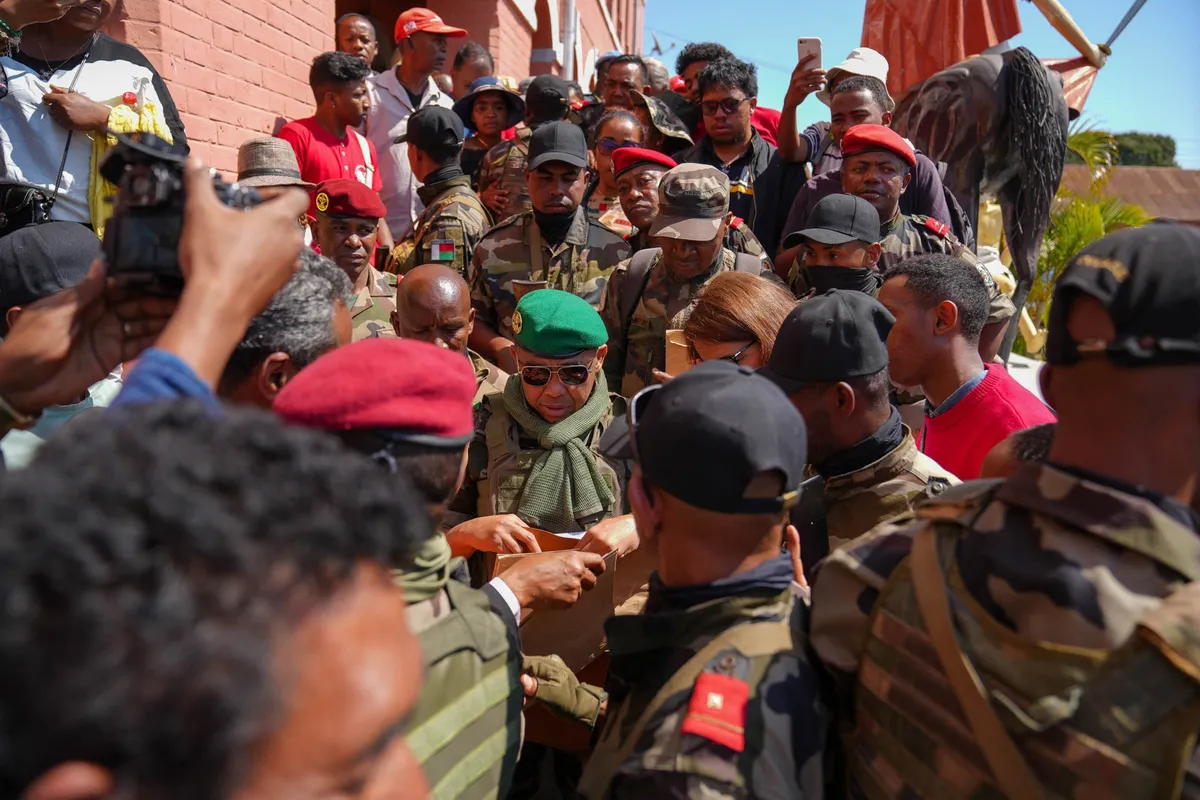
South Africa has officially taken over the leadership of the Southern African Development Community (SADC) from Madagascar, which decided to relinquish its chairmanship following a recent military takeover prompted by nationwide protests. The transition highlights the region’s commitment to maintaining continuity and stability within its institutional framework, despite political upheavals in member states.
The handover occurred over the weekend during a virtual summit of SADC heads of state and government, attended by several regional leaders. The gathering aimed to deliberate on the political developments in Madagascar and ensure that the regional bloc continued to function effectively under the SADC Treaty’s provisions for rotational leadership.
In a statement released on Saturday via its official X account, SADC confirmed that the regional leadership transition followed Madagascar’s formal decision to step down. The statement read: “The Southern African Development Community acknowledges the decision by Madagascar to step down as the chair of the organisation following recent political developments that have impacted her capacity to discharge the responsibilities of the position.”
The decision comes amid heightened political tension in Madagascar, where a military intervention followed widespread protests over economic hardship, corruption allegations, and dissatisfaction with governance. The political instability prompted concern among SADC member states about the country’s ability to effectively coordinate regional initiatives and preside over the bloc’s agenda.
South Africa’s assumption of the SADC chairmanship marks a critical moment for the organisation. As one of the bloc’s most influential members, Pretoria is expected to provide steady leadership while working closely with other member states to maintain regional integration, security, and economic development. The rotational leadership system, enshrined in the SADC Treaty, is designed to ensure that no single country dominates the bloc and that all members have an opportunity to contribute to shaping the organisation’s agenda.
In his address during the virtual summit, South African President Cyril Ramaphosa, who now serves as the interim SADC chairperson, emphasised the importance of solidarity, unity, and decisive action in navigating the challenges confronting the region.
South Africa Assumes SADC Chair Following Madagascar’s Step-Down Amid Political Turmoil
“From its inception, SADC has stood as a beacon of solidarity, guided by principles of peace, mutual benefit, and sovereign equality,” Ramaphosa said. “The challenges we face today — from political transitions to economic pressures — test these very values. We are called upon to act with urgency and foresight to stabilise the present while safeguarding the future of our organisation and the peoples of Southern Africa.”
President Ramaphosa also highlighted the bloc’s long-term vision, noting that SADC’s success depends on collective leadership and regional cooperation. “Our people continue to look to us for leadership that delivers the vision of a peaceful, inclusive, and industrialised region by 2050,” he added.
SADC Executive Secretary Elias Magosi reassured member states that Madagascar’s withdrawal would not disrupt the bloc’s ongoing projects or its strategic focus. He emphasised that the handover of the chairmanship to South Africa would ensure seamless continuity in SADC operations and preserve the integrity of the organisation’s programmes, including regional integration, economic development, and peace and security initiatives.
“The decision to change leadership does not signal a shift in our strategic priorities,” Magosi said. “The bloc will continue to pursue the objectives set during previous summits, particularly those aimed at advancing industrialisation, modernising agriculture, and transitioning to sustainable energy for a resilient SADC region.”
The extraordinary summit also agreed that Zimbabwe, as the outgoing SADC Chair prior to Madagascar, would host selected meetings during the interim period to maintain continuity and support the bloc’s administrative functions. This decision underscores the importance of cooperative leadership among member states during periods of transition.
Observers note that Madagascar’s step-down is a reminder of the fragility of political stability in parts of the region, and of the critical role SADC plays in ensuring continuity of governance and development initiatives. By transferring the chairmanship to South Africa, the bloc signals its commitment to resilience and the ability to adapt to changing political landscapes while maintaining focus on its long-term goals.
The handover also highlights the importance of collective regional responsibility. While individual member states may face internal crises, SADC’s rotational leadership mechanism ensures that the organisation’s functions — from economic cooperation to conflict prevention — continue uninterrupted.
As South Africa begins its tenure as interim chair, it faces the immediate challenge of fostering cohesion among member states, supporting Madagascar’s transition, and ensuring that the bloc’s agenda on economic integration and regional stability remains on track. Analysts say Pretoria’s leadership will be crucial in demonstrating that SADC can withstand internal disruptions while continuing to advance its regional mission.
The transition of the chairmanship from Madagascar to South Africa is more than a procedural change; it is a reaffirmation of SADC’s institutional resilience. The bloc’s ability to adapt to political shifts while maintaining continuity in leadership is a testament to its commitment to peace, stability, and development across Southern Africa.
Source- Bloomberg
-

-

-

-

-

-

-

-

-

-

