
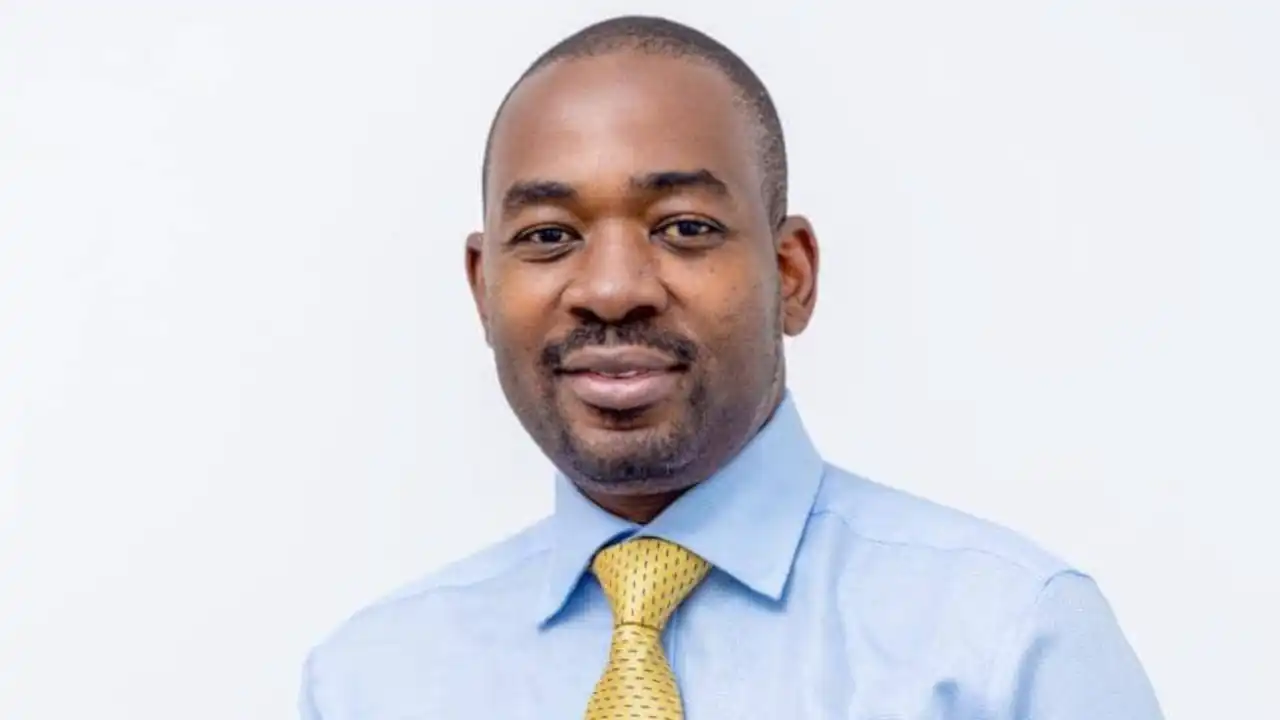
FORMER Citizens Coalition for Change (CCC) leader Nelson Chamisa has issued a stern warning to Zanu-PF against any attempt to amend the Constitution in order to extend President Emmerson Mnangagwa’s term of office, describing the proposal as “reckless political theatre” that could plunge the country into instability.
Chamisa’s remarks come amid growing debate over a Zanu-PF resolution adopted at the party’s Annual National People’s Conference in Bulawayo last year, which called for President Mnangagwa’s tenure to be extended to 2028. The resolution, commonly referred to as the “2030 agenda,” has since exposed sharp divisions within the ruling party, with several senior figures publicly questioning its legality and political wisdom.
One of the most vocal critics was former Zanu-PF central committee member Blessed Geza, who argued that the resolution was unconstitutional and should be abandoned. Geza warned that any attempt to extend the President’s term would violate the supreme law of the land and invite public resistance. His outspoken stance eventually led to his expulsion from the ruling party after he held a series of press briefings calling for mass action and demanding President Mnangagwa’s resignation.
Addressing guests at the Zimbabwe Charity Dinner held in Harare on Saturday night, Chamisa said Zimbabweans would not sit idly by if Zanu-PF attempted to bulldoze constitutional amendments to entrench Mnangagwa’s rule beyond the current limits.
Chamisa Intensifies Opposition Stance Against Mnangagwa
“Next year is an extraordinary year. Hakudyiwi rinopisa. We will mobilise and organise ourselves,” Chamisa said to loud applause. “They can go to Parliament and fast-track the amendment, but it is nothing. People are the government. Don’t play with the people. You can effect the amendment overnight, but that would be joking. This country belongs to the people.”
Chamisa stressed that the Zanu-PF resolution was merely an internal party position with no binding authority over the nation at large. He said such a resolution could not be imposed on Zimbabweans without their direct consent.
“A resolution of an organisation cannot be a national resolution. Ndezvekumba kwenyu,” he said. “You can do that at party level. But at national level, we will all be involved and we must all have a say.”
The opposition leader also dismissed claims by ruling party supporters that the opposition lacked the capacity to mobilise citizens against the proposed constitutional changes. According to Chamisa, Zimbabweans still possess the power to assert themselves when fundamental democratic principles are threatened.
“Some may say, will you be able to do it? Yes, we can,” he said. “We can bring this country to a standstill if we want at any time.”
Zimbabwe’s 2013 Constitution places clear limits on presidential power. Section 91 confines the President to two five-year terms, while Section 143 stipulates that the President’s term is tied to the life of Parliament. As a result, any extension of presidential tenure would automatically affect the duration and legitimacy of Parliament, raising serious constitutional implications.
The process for altering such provisions is outlined in Section 328 of the Constitution, which sets a high threshold for amendments. Changes to entrenched clauses, including presidential term limits, require a two-thirds majority in both houses of Parliament as well as approval by a national referendum.
Constitutional experts have consistently warned that extending President Mnangagwa’s term to 2028 would be legally problematic. Constitutional lawyer and University of Zimbabwe lecturer Professor Lovemore Madhuku has argued that such an extension would require two separate referendums, which cannot lawfully be conducted at the same time. He has described attempts to bypass these safeguards as unconstitutional.
Supporters of the proposed extension have cited Section 95(2)(b) of the Constitution, which allows for a limited administrative extension of a President’s tenure to avoid a temporary power vacuum between an election and the swearing-in of a successor. However, legal scholars maintain that this provision is narrow in scope and cannot be used to justify a substantive extension of a presidential term.
The debate has continued to generate national interest and concern. President Mnangagwa has on several occasions publicly stated that he will respect the Constitution and step down when his term expires. Despite these assurances, analysts have cautioned against complacency, noting that political positions can shift over time.
There are also growing reports that Zanu-PF may attempt to introduce the amendment Bill during the festive season, a period when public attention is often diverted toward holidays and social activities. Critics argue that such timing could be a calculated move to reduce scrutiny and limit public engagement on a matter of national importance.
As the debate intensifies, Chamisa and other critics insist that Zimbabwe’s constitutional order must be protected, warning that any attempt to undermine it risks deepening political tensions and eroding public trust in democratic institutions.
Source- Byo24
-

-

-

-
-

-

-

-

-

-

