

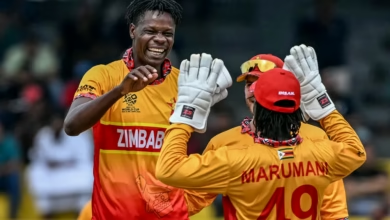
Zimbabwe’s fast bowling star Blessing Muzarabani has been handed a two-year ban from the Pakistan Super League (PSL), a decision that has sparked widespread debate across the cricket world.
The ban comes after Muzarabani pulled out of the PSL to join the Indian Premier League (IPL), a move that has raised serious questions about player commitments in modern franchise cricket.
Contract Dispute Leads to Ban
Muzarabani had initially signed with PSL side Islamabad United for the 2026 season. However, shortly after agreeing to the deal, he withdrew and opted to join IPL outfit Kolkata Knight Riders instead.
That decision did not sit well with the Pakistan Cricket Board (PCB), which launched a disciplinary process to review the situation.
Following the investigation, the PCB ruled that Muzarabani will be barred from participating in the PSL for the next two editions, effectively sidelining him from the competition until 2029.
PCB Draws a Line
In its response, the PCB made it clear that the ruling was about maintaining discipline and protecting the integrity of the league.
Officials stressed that professional cricket depends on players honouring contracts, and failing to do so weakens the structure of franchise competitions.
The message was firm — players cannot commit to one league and then switch without consequences.
IPL Opportunity Still Open
Despite the ban, Muzarabani’s move to the IPL has already opened new doors.
The Zimbabwean pacer has featured for Kolkata Knight Riders after being brought in as a replacement, giving him a chance to compete on one of cricket’s biggest stages.
For many players, the IPL remains the most attractive option due to its financial rewards and global exposure, even when it clashes with other leagues.
A Bigger Problem in Cricket
Muzarabani’s situation reflects a growing issue in international cricket.
With major leagues like the IPL and PSL often overlapping, players are increasingly forced to choose between contracts. This has created tension between competitions and governing bodies.
The PCB’s decision to impose a two-year ban shows a tougher approach to handling such cases, especially when agreements have already been signed.
Career Still on the Rise
While the ban is a setback, it does little to slow down Muzarabani’s overall career.
The 29-year-old has been one of Zimbabwe’s top performers in recent years, earning recognition for his pace, bounce and consistency. His performances on the international stage and in T20 cricket have made him a valuable player in leagues around the world.
Mixed Impact of the Ban
The PSL ban means Muzarabani will miss out on two seasons of one of the top T20 leagues outside the IPL.
However, the decision does not affect his international career or his eligibility to play in other competitions, including the IPL.
This creates a mixed outcome — a setback in one league, but continued opportunities elsewhere.
Debate Around Player Choices
The ruling has sparked debate among fans and analysts.
Some believe players should have the freedom to choose the best opportunities for their careers, especially in a crowded cricket calendar. Others argue that contracts must be respected to maintain fairness and professionalism.
Muzarabani’s case highlights the difficult balance between personal career growth and professional responsibility.
A Warning to Other Players
Beyond the individual case, the decision sends a strong message to players across the cricket world.
Franchise leagues are becoming more structured, and authorities are showing they are willing to take firm action when agreements are broken.
Players may now have to think carefully before signing deals with overlapping commitments.
What Comes Next
For Muzarabani, the focus now shifts to making the most of his opportunities in the IPL and on the international stage.
For the PSL, it’s about reinforcing its rules and protecting its reputation.
And for cricket as a whole, this could be a defining moment in how conflicts between major leagues are handled going forward.
-

-

-

-

-

-
-

-

-

-

