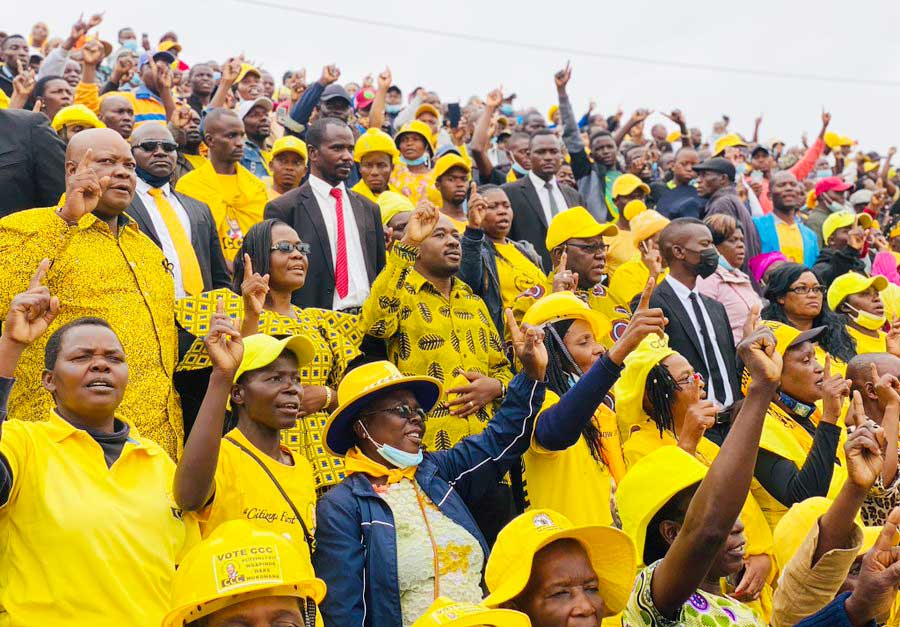
Many Zimbabweans are grappling with a difficult question: how do they fit into the country’s shifting political landscape, especially as the once-burning desire for change appears to be fading? Disillusionment is spreading, not just with the ruling elite, but also with an opposition that seems increasingly disconnected from the real struggles of the people.
What Zimbabwe urgently needs now is a recalibration of its entire opposition framework. The current political conflict calls for serious realignment—a rebuilding of purpose, structure, and leadership. There is a glaring need for a resilient, united opposition movement that can resonate with both rural and urban voters, something the country has sorely lacked in recent years.
The last time Zimbabwe had a truly formidable opposition was in 2000, under the leadership of the late Morgan Tsvangirai and the Movement for Democratic Change (MDC). Despite the odds—state-sponsored intimidation and allegations of electoral fraud—the MDC managed to secure 57 of the 120 parliamentary seats. That moment marked a turning point and sparked hope for a more democratic Zimbabwe.
Unfortunately, over the past two decades, that momentum has all but vanished. The opposition has increasingly appeared more focused on internal power plays and personal gain than on addressing the needs and aspirations of the masses. The disconnect between political rhetoric and the lived experiences of ordinary citizens has only deepened.
While the opposition has postured as the voice of the people, its actions have often contributed to deepening political polarisation and social divisions. Instead of offering a credible alternative, it has sometimes played directly into the hands of the ruling party by fueling infighting, incompetence, and complacency.
Zimbabwe’s Opposition at a Crossroads: Time for Realignment and Renewal
Today, Zimbabweans watch in despair as the ruling elite enjoys lavish lifestyles, while citizens endure economic hardship and basic survival struggles. Meanwhile, many opposition leaders have grown comfortable in their roles, failing to push back with conviction or offer practical solutions. The people’s loyalty is repeatedly taken for granted. Their hope is exploited, their pain politicised, and their patience abused.
The truth is, there is currently no credible opposition party to speak of in Zimbabwe. Many so-called opposition figures have, in reality, benefited from backdoor dealings, bribes, and covert alliances with the ruling ZANU-PF. These individuals continue to parade as opposition leaders, but their loyalties shift based on personal gain rather than principle.
“Politics of the stomach” has become the new currency of power. Opportunism has replaced ideology. Many politicians have entered the opposition not to serve, but to loot. Their goal is to accumulate wealth with minimal effort. The needs of the electorate are often at the bottom of their agenda.
Nelson Chamisa, viewed by many as the face of opposition, now finds himself at a crossroads. If he is not cautious, he risks falling into the same traps that have rendered other political formations ineffective and discredited. He must decide whether he wants to lead a people-centered movement or preside over another elite club of self-serving politicians.
Opposition leaders have long benefited from blind public support. Despite repeated failures, they are rarely held accountable. Some have accepted bribes, become arrogant, failed to deliver basic services, or entered dubious alliances with ZANU-PF—all while presenting themselves as champions of democracy.
At this point, the Zimbabwean opposition has become toxic to its own cause. Rather than confronting the ruling party with renewed vigor and strategy, it has allowed itself to be weakened from within. Even at the grassroots level, morale has collapsed. Ordinary members—once the engine of political activism—have grown weary and hopeless. They now survive on handouts while leadership lives in comfort.
Meanwhile, the internal power struggles plaguing the ruling ZANU-PF could provide a window of opportunity for a revitalised opposition. But only a disciplined, visionary and morally upright opposition can take advantage of that. Sadly, such qualities are in short supply.
Many of Zimbabwe’s politicians are burdened by unresolved personal histories and hidden alliances that continue to influence their actions. Until those issues are addressed, it is difficult to imagine meaningful reform coming from within.
Zimbabweans must remain vigilant. The public must stop placing blind faith in individuals simply because they claim to oppose the regime. Citizens must demand accountability, transparency, and integrity from all political actors—whether in government or opposition.
Without a serious reshuffle, a new political culture, and a recommitment to service, the opposition risks becoming indistinguishable from the very system it claims to fight.