Mnangagwa- Zimbabwe has officially concluded its tenure as chair of the Southern African Development Community (SADC) Council of Ministers, handing over the position to Madagascar during a high-level meeting in Antananarivo. The transition marks the end of a year-long term in which Zimbabwe steered the policy-making arm of the regional bloc through a series of economic, political, and security discussions.
The Council of Ministers, which is meeting from 12 to 14 August 2025 in the Malagasy capital, is laying the groundwork for the upcoming 45th SADC Summit of Heads of State and Government, scheduled for 17 August. This year’s summit will take place under the theme: “Advancing Industrialisation, Agricultural Transformation, and Energy Transition for a Resilient SADC.” The gathering brings together ministers from the 16-member bloc to deliberate on policies aimed at accelerating regional integration, boosting trade, improving infrastructure, and safeguarding peace and stability across Southern Africa.
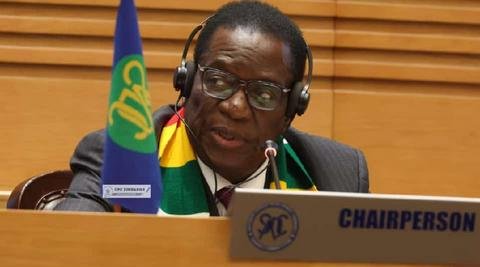
The ceremonial transfer of the chairmanship took place on Tuesday, with Zimbabwe’s Minister of International Relations and Trade, Professor Amon Murwira, formally passing the baton to Madagascar’s Minister of Foreign Affairs, Rafaravavitafika Rasata. The moment symbolised not only the continuity of SADC’s work but also the spirit of unity that underpins the organisation’s vision.
In his final address as chair, Murwira called for urgency in implementing SADC’s binding legal instruments, warning that the slow pace of ratifying protocols and agreements was hindering the bloc’s integration agenda.
“A key impediment to advancing our regional integration agenda is our slow uptake of SADC Protocols and Agreements. This delay is not just a procedural concern; it strikes at the very heart of our shared vision for a united, prosperous, and resilient region,” Murwira said.
He praised Rasata’s appointment, pledging Zimbabwe’s full cooperation during her term and encouraging other member states to extend the same support.



Zimbabwe Hands Over SADC Council Chairmanship to Madagascar Ahead of Regional Summit
Accepting the role, Rasata thanked the Council for its confidence in Madagascar’s leadership and promised to ensure that the interests of all member states — both island and mainland — were represented in the regional agenda.
“SADC is an essential pillar of regional cooperation and solidarity, on which we can rely to jointly address our challenges and seize the opportunities before us,” she said.
“By uniting the maritime, economic, environmental, and cultural potential of the islands with the resources, agricultural strength, and industrial capacity of our continental states, we can build the self-reliant and competitive SADC we aspire to.”
Her remarks underscored Madagascar’s strategic position as both an island nation and an integral part of the Southern African community, with the potential to bridge maritime trade and continental economic networks.
Over the three-day session, ministers are reviewing progress on the SADC Regional Indicative Strategic Development Plan (RISDP) for 2020–2030, which serves as the bloc’s blueprint for long-term growth. The agenda covers critical areas including industrialisation, cross-border infrastructure development, energy generation and distribution, food security, and measures to strengthen peace and security.
The Council is also examining institutional reports from various SADC bodies, assessing their performance, and adopting decisions that will guide the next phase of the region’s integration process.
Energy transition is expected to feature prominently in the talks, reflecting the growing urgency for member states to diversify their energy sources and reduce dependency on fossil fuels, in line with global climate commitments. Agricultural transformation will also be a focal point, with discussions centred on boosting productivity, ensuring food self-sufficiency, and building resilience against climate shocks.
The outcomes of the Council meeting will be presented to the 45th SADC Summit, where Heads of State and Government will consider, refine, and endorse them. This annual summit represents the highest decision-making body in SADC and often sets the tone for the region’s policy direction over the coming year.
The 2025 summit’s theme — industrialisation, agricultural transformation, and energy transition — signals the bloc’s determination to move beyond dependence on raw commodity exports and towards a more diversified, sustainable, and self-sufficient economic model. Leaders are expected to announce concrete initiatives to support value addition in manufacturing, expand regional power generation, and modernise agricultural systems.
Zimbabwe’s term as Council chair saw the advancement of several integration priorities, including trade facilitation measures, the harmonisation of industrial policies, and the strengthening of regional peace and security mechanisms. While challenges remain — particularly in achieving consensus on policy implementation timelines — the handover to Madagascar is viewed as a smooth transition that ensures continuity in the bloc’s work.
As Madagascar takes over, expectations are high for the country to infuse new momentum into SADC’s initiatives, particularly by enhancing the participation of island states in regional projects. With the combined resources of the continent and the maritime potential of the islands, Rasata said the bloc could create a stronger, more competitive presence in the global economy.
The Council’s resolutions this week will provide the roadmap for the next year’s efforts, shaping how SADC navigates a rapidly changing geopolitical and economic landscape. For both Zimbabwe and Madagascar, the exchange of the chairmanship represents not just a procedural formality, but a reaffirmation of the cooperative spirit that has guided the bloc for over four decades.
Source- ZimEye