
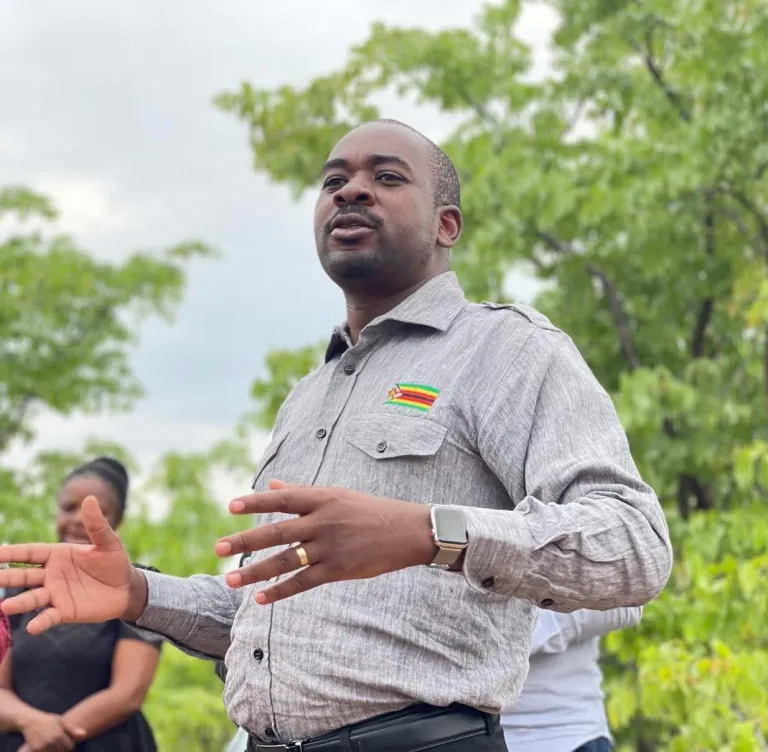
Chamisa and his team have expressed strong condemnation of the ruling Zanu-PF party’s recent resolution to extend President Emmerson Mnangagwa’s term of office by two years beyond the constitutional limit, calling the decision both unconstitutional and undemocratic. The move, they say, threatens to undermine the country’s legal framework and democratic norms.
The resolution emerged from the 22nd Zanu-PF Annual People’s Conference, held in Mutare, where party delegates adopted a directive for both the government and Zanu-PF to begin legal, constitutional, and administrative processes to extend Mnangagwa’s tenure from 2028 to 2030. The conference instructed the Ministry of Justice to initiate the necessary legal work and ensure that the process was completed by October next year.
President Mnangagwa is currently serving his second and final term, which is constitutionally scheduled to end in 2028. He has repeatedly affirmed his commitment to step down at the conclusion of his mandate. However, the resolution from the ruling party has reignited political tensions, with critics accusing Zanu-PF of attempting to subvert the Constitution for partisan advantage.
The development was confirmed by Zanu-PF’s information secretary, Nick Mangwana, on X (formerly Twitter), who described the decision to extend the presidential term as a formal resolution adopted by the party’s delegates. While Zanu-PF argues that the measure is aimed at continuing Mnangagwa’s “visionary leadership,” opposition leaders have rejected any legitimacy to the party’s internal resolutions over constitutional matters.
Nelson Chamisa, former leader of the Citizens Coalition for Change (CCC) Chamisa, was quick to dismiss the resolution, asserting that it had no authority over the people of Zimbabwe. “Zanu-PF resolutions bind Zanu-PF and her members, not Zimbabwe and her people,” Chamisa stated on X, emphasizing that the decision is an internal party matter and cannot supersede the Constitution.
Chamisa’s CCC interim leader Jameson Timba echoed Chamisa’s stance, stressing that any amendment to extend a presidential term would require a national referendum. “Zanu-PF’s 2030 resolution of today is silent on how it will be done. If it means changing the Constitution, only a referendum can decide—and even then, the sitting President cannot benefit. Zimbabwe is ruled by law, not party resolutions,” Timba said, highlighting the legal limitations of the party’s directive.
Prominent opposition figure Tendai Biti also weighed in, vowing to resist what he described as an attempt to “capture the Constitution” for partisan interests. “Our mandate is short and brief. We will defend the Constitution against its capture and manipulation to advance a dangerous unconstitutional anti-people agenda. We will fight corrupt cartels and syndicates that have systematically looted Zimbabwe and now want to take over the State,” Biti said on X, framing the move as part of a broader effort to consolidate power.
Chamisa Condemns Zanu-PF Move to Extend President Mnangagwa’s Term as Unconstitutional
Despite the backlash, Zanu-PF delegates defended their position, arguing that Mnangagwa’s leadership had brought stability, economic recovery, and transformative development to the nation. Party supporters maintain that extending his term would allow ongoing initiatives to reach fruition and safeguard the country’s developmental trajectory.
However, critics argue that the proposal, if pursued, would require substantial constitutional amendments, potentially igniting one of Zimbabwe’s most contentious political battles in recent years. Any effort to extend the presidential term beyond 2028 without following proper constitutional procedures could provoke widespread opposition from civil society, opposition parties, and sections of the population concerned with governance and democratic accountability.
The move highlights the tensions between party politics and constitutional governance in Zimbabwe. While ruling parties may pursue internal resolutions reflecting their priorities, the country’s legal framework stipulates that any changes to presidential terms must follow constitutional procedures, including public consultation or a referendum. Failure to comply with these processes could result in legal challenges and a national debate over the legitimacy of the government’s actions.
As Zimbabwe prepares for what could become a defining political contest, Chamisa and his team have called on citizens, civil society, and the judiciary to remain vigilant and ensure that constitutional principles are upheld. Observers suggest that the coming months will be critical in determining whether Zanu-PF can implement its 2030 vision or whether legal and political resistance will prevent the extension of Mnangagwa’s term.
The ruling party’s resolution has thus set the stage for a high-stakes constitutional and political showdown, one that will test Zimbabwe’s democratic institutions and the resilience of its legal frameworks in safeguarding the rule of law.
Source- Bulawayo24
-

-

-

-

-

-

-

-

-

-

