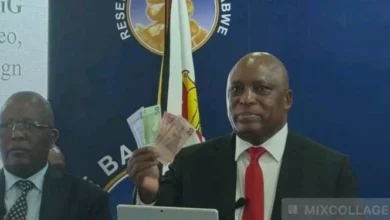
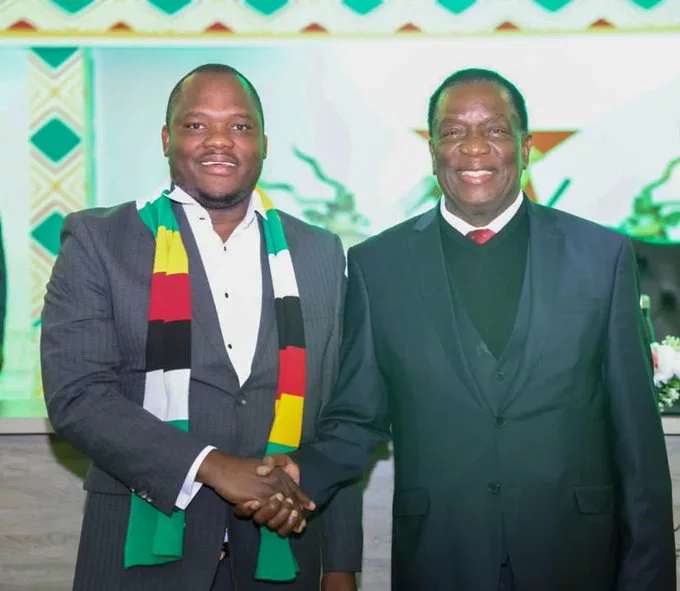
Presidential Special Investment Advisor Dr. Paul Tungwarara has triggered a wave of public outrage and political debate after declaring that he was willing to “die for President Emmerson Mnangagwa,” urging critics of the Head of State to “shut up.” His controversial remarks, made over the weekend during a gathering of Zanu PF affiliates in Mutare, have reignited concerns about political intolerance, hero-worship, and the conflation of party loyalty with public service.
In a fiery speech, Tungwarara expressed what he described as “unwavering loyalty” to President Mnangagwa, pledging total devotion to defending him against detractors. “We are ready to die for the President, even to go to jail. We are not afraid of anyone. Those who are attacking the President, please shut up,” he told the gathering, drawing applause from ruling party supporters in attendance.
However, his comments quickly provoked sharp criticism from opposition leaders, civil society organisations, and independent commentators, who accused him of undermining democratic principles and promoting a personality cult around the President. Critics argued that a senior government advisor, especially one tasked with promoting investment and economic reform, should be advancing the interests of citizens — not pledging personal allegiance to a political leader.
“The statement reflects a disturbing level of political fanaticism,” said one Harare-based governance analyst. “Public officials are supposed to serve the country, not the President as an individual. This kind of rhetoric belongs to authoritarian politics, not to a modern democracy.”
The opposition Citizens Coalition for Change (CCC) condemned Tungwarara’s remarks, describing them as “irresponsible and dangerous.” A CCC spokesperson said, “Zimbabwe needs public servants who are committed to building institutions and delivering services, not individuals who swear blind loyalty to one person. The message from Tungwarara reinforces the very culture of fear and repression that has stifled accountability for decades.”
Civil society organisations echoed similar concerns, warning that the comments exemplified a growing culture of political intolerance within the ruling party. The Zimbabwe Human Rights NGO Forum said Tungwarara’s words were “an affront to democratic values and an open endorsement of political violence.” The forum urged government officials to remember that their oaths of office require loyalty to the Constitution, not to any political figure.





Analysts also noted that Tungwarara’s statement raises troubling questions about how state officials perceive their roles in governance. As Presidential Special Investment Advisor, Tungwarara’s portfolio is meant to attract both domestic and foreign investment, promote investor confidence, and help implement reforms that strengthen Zimbabwe’s economic standing. By framing his loyalty in militaristic and partisan terms, critics argue, he risks alienating potential investors and reinforcing perceptions of politicisation within state institutions.
“Investment advisors should be neutral technocrats, focused on building confidence and ensuring a predictable business environment,” said economic commentator Tawanda Majoni. “When someone in that position publicly declares that they are ready to die for a political leader, it sends the wrong message to investors who already worry about political instability and policy inconsistency.”
The controversy also highlights broader concerns about the cult of personality that has long characterised Zimbabwean politics. From the liberation era to the present day, senior officials have often expressed exaggerated loyalty to ruling party leaders, sometimes equating criticism of the President with treason. This dynamic, analysts say, perpetuates a political culture in which dissent is discouraged and constructive criticism is treated as betrayal.
Some observers compared Tungwarara’s remarks to similar declarations made during the late former President Robert Mugabe’s rule, when senior Zanu PF officials often declared that they would “die for the President.” The recurrence of such rhetoric, they argued, suggests that Zimbabwe’s political elite has not fully moved past the old patterns of leader-worship and unquestioning obedience.
“The statement is not just a slip of the tongue — it reflects a mindset,” said political scientist Dr. Eldred Masunungure. “When officials blur the line between loyalty to the state and loyalty to an individual, they undermine the principle of accountable governance. It’s a dangerous tradition that Zimbabwe has struggled to outgrow.”
Meanwhile, members of the public took to social media to express outrage and ridicule. Many Zimbabweans described Tungwarara’s words as tone-deaf at a time when the country is grappling with economic hardship, power cuts, and rising unemployment. “Instead of dying for the President, he should be working to fix the economy,” one user wrote on X (formerly Twitter). Others questioned why high-ranking officials would glorify personal loyalty when citizens are demanding transparency, jobs, and affordable living conditions.
Despite the backlash, ruling party loyalists have defended Tungwarara, insisting that his comments were merely an expression of patriotic support for President Mnangagwa’s leadership. A Zanu PF insider said, “Dr. Tungwarara’s message was about unity and discipline. He was encouraging supporters to defend the President against unfair criticism from those who seek to destabilise the government.”
Still, the uproar surrounding his remarks underscores a persistent divide between those who view loyalty to the President as a mark of patriotism and those who see it as a symptom of institutional weakness.
As the controversy continues, observers say Tungwarara’s statements serve as a reminder of the challenges facing Zimbabwe’s democratic consolidation — where public officials must choose between allegiance to political authority and commitment to constitutional duty.
Source-