
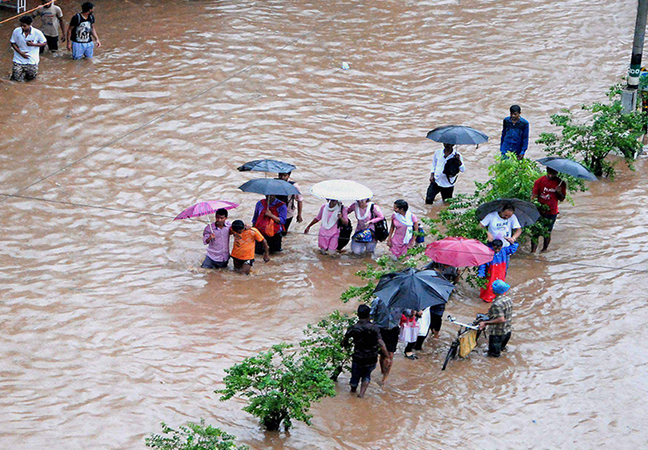
Floods have devastated Mokwa and nearby areas in Niger State, prompting Turkey to express deep condolences and solidarity with Nigeria over the tragic loss of life and widespread destruction.
In an official statement released on Sunday, June 2, 2025, the Turkish Ministry of Foreign Affairs conveyed deep sorrow over the tragic events, offering sympathies to the Nigerian government and the affected families. The ministry further affirmed Turkey’s willingness to support Nigeria in its ongoing relief and recovery efforts.
“We are profoundly saddened by the devastating floods that have caused tragic loss of life and widespread destruction in the Mokwa region of Niger State,” the ministry’s statement read. “Our deepest condolences go out to the families who lost their loved ones, as well as to the government and people of Nigeria during this painful time.”
The floods, triggered by days of relentless rainfall, submerged entire communities in central Nigeria, especially in Mokwa and its surrounding areas. Infrastructure such as roads and bridges were severely damaged, while homes were destroyed, leaving thousands homeless and vulnerable. Swift currents swept away property and lives, plunging the region into one of the worst humanitarian crises in recent memory.
Turkey Stands with Nigeria After Deadly Niger State Floods
Reacting to the calamity, President Bola Ahmed Tinubu dispatched a federal delegation to Niger State on Saturday to assess the situation and oversee emergency response measures. The team, which includes officials from the National Emergency Management Agency (NEMA), the Federal Ministry of Humanitarian Affairs, and senior presidential aides, is tasked with coordinating relief operations and recommending long-term solutions.
According to statistics released by the Niger State Government, at least 151 people have lost their lives in the floods. More than 3,000 individuals have been displaced, many of whom are now taking shelter in temporary camps, schools, and places of worship. Relief organizations on the ground are racing to provide essential services such as food, clean water, sanitation, and medical care.
Governor Mohammed Umaru Bago described the floods as unprecedented in scale. “This is one of the worst natural disasters to hit Niger State,” he said during a press conference. “Entire communities have been washed away. We have recorded the loss of over 260 homes, several township roads, and key bridges, especially in Mokwa and Raba. The situation is urgent, and we need assistance from the federal government and the international community.”
The disaster has drawn condolences and pledges of support from around the world, including from the United Nations, the African Union, and other regional organizations. Turkey’s timely message has been particularly well-received, symbolizing the country’s growing humanitarian engagement across Africa.
In recent years, Turkey has deepened its diplomatic ties and development partnerships on the continent. Humanitarian agencies such as the Turkish Cooperation and Coordination Agency (TIKA) and the Disaster and Emergency Management Authority (AFAD) have played key roles in delivering aid and supporting infrastructure development in several African nations.
Although Ankara has not yet announced a formal aid package for the Niger State flood victims, Turkish diplomatic sources indicate that talks are ongoing. “Our embassy in Abuja is closely monitoring the situation,” a Turkish official said. “We are in discussions with relevant Nigerian authorities to determine how Turkey can best contribute to relief and reconstruction efforts.”
The disaster in Niger State highlights broader challenges faced by Nigeria and many African nations as they contend with climate change and the growing frequency of extreme weather events. Environmental experts have long warned that inadequate drainage systems, deforestation, and unregulated urban development make communities highly susceptible to flooding.
“There is no doubt that climate change is amplifying these disasters,” said Dr. Idris Garba, a climate policy analyst at the University of Abuja. “But there is also a systemic failure in planning and preparedness. What happened in Mokwa is both a natural and a man-made tragedy. We must act now to build climate resilience.”
Experts are urging Nigerian leaders to implement proactive policies, including investments in early warning systems, flood defenses, reforestation programs, and community education. They argue that while humanitarian aid is vital in the short term, sustainable development and climate adaptation are the long-term answers.
As the waters begin to recede and emergency aid continues to flow in, the focus now shifts to rebuilding lives and restoring hope. The road to recovery will be long and complex, but with international partners like Turkey extending a hand of friendship and support, the people of Mokwa and Niger State can begin the healing process.
In the midst of loss and devastation, Turkey’s expression of solidarity serves as a poignant reminder of the global community’s capacity for empathy and unity in the face of shared human suffering.
-

-

-

-

-

-

-

-

-

-

