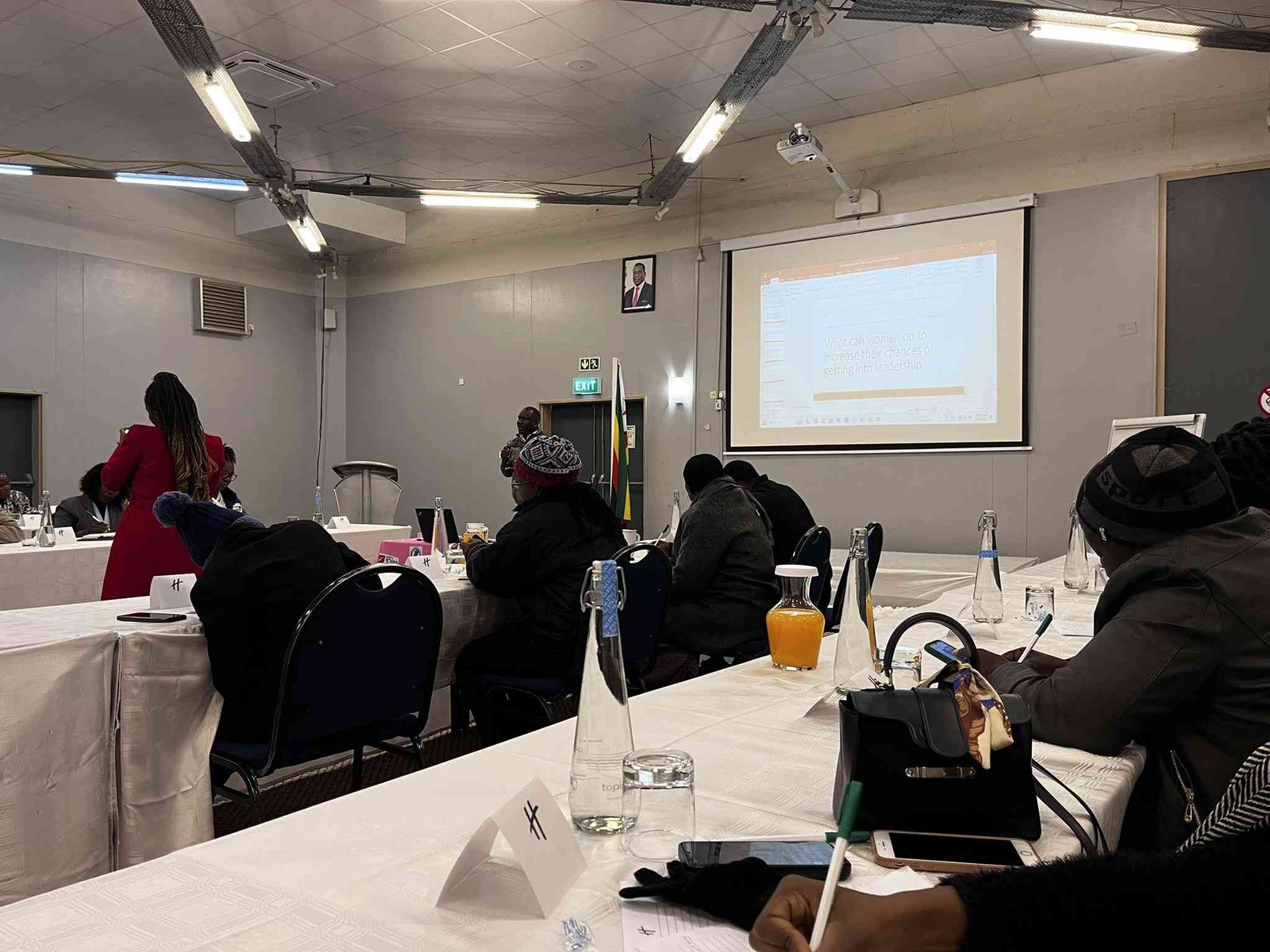
A week-long feminist leadership training held in Bulawayo has brought renewed momentum to the fight for gender parity in Zimbabwe’s political arena. The programme, attended by proportional representation councillors, sitting lawmakers, and aspiring women leaders, was designed to equip participants with the tools, knowledge, and confidence needed to pursue and excel in elected positions.
The training was facilitated by the Women’s Academy for Leadership and Political Excellence (WALPE) in partnership with the Zimbabwe Gender Commission, the Ministry of Women Affairs, Community, and Small and Medium Enterprises Development, and UN Women Zimbabwe. The initiative is part of ongoing efforts to address the underrepresentation of women in decision-making spaces and advance inclusive leadership across all levels of governance.
Participants were taken through a range of critical topics, including gender-responsive budgeting, building successful campaign strategies, and combatting online violence against women in politics. The sessions also featured practical guidance on public speaking, community mobilisation, media engagement, and navigating political party structures—skills essential for any woman seeking to make an impact in public office.
The programme came at a crucial time. Despite being the majority of the population, women currently occupy only 23 out of 210 parliamentary seats, a decline from 25 seats in the 2018 election. This regression has raised concerns among gender advocates, prompting initiatives like WALPE’s training to urgently reverse the trend ahead of the 2028 national elections.
WALPE gender and membership officer Thelma Mabika said the training was grounded in the belief that women must be active, confident agents of political change—not merely passive beneficiaries of token appointments. “We want women to move beyond waiting for positions and instead confidently compete for roles that enable them to develop their communities,” Mabika said. “Women must take leadership into their own hands.”
Bulawayo Hosts Transformative Leadership Training to Boost Women’s Political Participation
Mabika also stressed the need to tackle the barriers that continue to hinder women’s political participation, particularly violence against women in politics, both physical and online. One major issue explored during the sessions was the role of social media as a weaponised space—often used to intimidate, silence, or humiliate women who dare to enter the public arena.
“Online violence is a form of political suppression,” she explained. “Many women shy away from running for office because they fear cyberbullying, character assassination, and targeted harassment. We must create safer spaces—both online and offline—for women to lead.”
During the sessions, participants shared personal stories of the obstacles they have faced, including being undermined within their own parties, lack of campaign funding, and societal stereotypes about women’s roles. In response, they collectively drafted community action plans aimed at increasing political engagement among women in their wards, constituencies, and districts.
These plans include voter education drives, leadership mentorship for young women, and coordinated lobbying within political parties to push for gender quotas to be implemented more effectively—not just on paper, but in practice.
The Bulawayo programme is part of WALPE’s wider nationwide campaign to build a pipeline of women leaders ahead of the 2028 elections. Similar workshops have already been held in Manicaland, Mashonaland East, Mashonaland West, and Harare, with plans to expand into remaining provinces by the end of the year.
According to WALPE, training alone is not enough. Follow-up mentorship and structural reforms within political parties are essential to ensure women not only contest elections, but win and deliver. The organisation is lobbying for stronger legal frameworks to protect women from political violence and is working with media houses to promote more balanced, respectful coverage of female candidates.
Representatives from the Zimbabwe Gender Commission and Ministry of Women Affairs commended the initiative and reaffirmed their commitment to working with civil society to create an enabling environment for women in politics.
As Zimbabwe gears up for future electoral cycles, the hope is that these early investments in women’s leadership development will yield tangible results—not just in numbers, but in transforming how power is shared and how governance is delivered.
“Women’s leadership is not just about representation; it’s about changing the culture of politics,” said one participant. “We are not just standing for office—we are standing for a new kind of leadership that puts communities, development, and equality at the centre.”
Source- newsday
-
Two Sentenced in Zambia Over Chameleon Ritual Plot Against Hichilema -
South African Court Orders Return of Zambia’s Former President Lungu for Burial -
South African Court Orders Repatriation of Former Zambian Leader Lungu’s Body -
Zambia Declares National Mourning Following Death of Former President Edgar Lungu -
Zambia’s Former President Edgar Lungu Dies at 68 -
President Mnangagwa Welcomes University of Zambia Law Alumni to State House -
Zambian mother and son’s marriage sparks outrage -
Prophet Uebert Angel overwhelmed by record crowd at Zambia crusade -
Zambia to Import Electricity Amid Severe Drought and Power Shortages -
Copper heist shocks Chirundu border post