
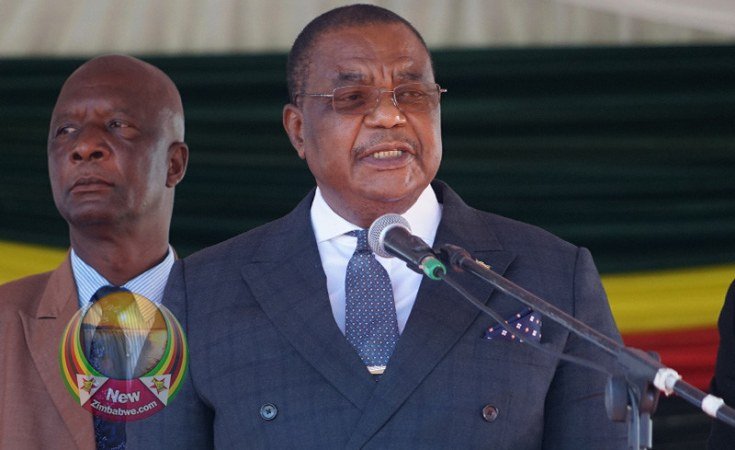
Vice President Constantino Chiwenga has forced President Emmerson Mnangagwa into a rare public rebuke of controversial businessmen long regarded as powerful financiers within Zanu-PF.
Speaking at an urgent sitting of the party’s Central Committee and Politburo on Thursday, Mnangagwa issued a warning against ostentatious displays of unexplained wealth, remarks widely interpreted as a direct response to his deputy’s mounting pressure.
“Those splashing money without traceable sources should be arrested,” Mnangagwa declared, in what many insiders viewed as his most explicit attempt yet to distance himself from the so-called Zvigananda — a group of businessmen accused of leveraging their proximity to the President to amass power and influence.
The development followed a tense Politburo meeting on Wednesday, during which Chiwenga reportedly presented a dossier accusing four of Mnangagwa’s closest allies — fuel dealer Kudakwashe Tagwirei, energy mogul Wicknell Chivayo, presidential associate Delish Nguwaya, and gold magnate Scott Sakupwanya — of capturing both the state and the ruling party.
Known collectively as the Zvigananda, the businessmen have bankrolled Zanu-PF’s high-profile events, sponsored lavish campaigns, and flaunted their wealth at a time when millions of ordinary Zimbabweans are enduring economic hardship.
According to sources, Chiwenga’s dossier detailed how the group had entrenched their business empires through murky financial networks, corruption, and political patronage. He is said to have warned that their unchecked influence threatened to delegitimise the party and erode public trust.
The Vice President reportedly demanded their arrest for corruption and financial crimes, accusing them of using their proximity to Mnangagwa as a shield from accountability.
Chiwenga Pushes Mnangagwa to Disown Flamboyant Zanu-PF Benefactors
The clash has brought into sharp focus the growing tensions between Zimbabwe’s two most powerful men, reviving speculation about succession battles and internal fissures ahead of the 2028 harmonised elections.
Since the ouster of the late Robert Mugabe in 2017, Mnangagwa and Chiwenga have maintained an uneasy partnership, united more by political necessity than mutual trust. For years, Mnangagwa leaned on wealthy allies such as Tagwirei and Chivayo to bankroll his political machinery. But Chiwenga has increasingly viewed their dominance as corrosive to Zanu-PF’s liberation ethos and grassroots structures.
“This is the most visible crack in their relationship since 2017,” one senior party insider told reporters. “Chiwenga is openly challenging the President’s inner circle, and Mnangagwa is struggling to balance loyalty to his financiers with the need to keep the party intact.”
The feud also comes against the backdrop of the so-called “2030 agenda,” a push by Mnangagwa loyalists to amend the Constitution and extend his rule beyond the two-term limit set to expire in 2028.
While addressing the Central Committee, Mnangagwa appeared to rebuke those pushing for his continued stay, but his language left some room for speculation.
“It is of importance that we introspect as a party, not only with regards to our short-term activities, but in view of the bigger objective that our party wins the 2028 harmonised general elections,” he said.
Chiwenga, however, has openly opposed any attempts to prolong Mnangagwa’s rule, insisting that the 2028 elections must proceed within constitutional bounds. Behind closed doors, he has warned colleagues that overreliance on oligarchs like the Zvigananda is weakening Zanu-PF’s credibility and undermining its liberation legacy.
The confrontation between Zimbabwe’s two most powerful figures underscores the fragility of the ruling party’s internal cohesion. With the economy battered by inflation, unemployment, and corruption scandals, Zanu-PF is struggling to maintain legitimacy among its traditional support base.
Insiders say Chiwenga’s intervention has emboldened other senior figures who privately harbour concerns about the growing influence of Mnangagwa’s business allies. However, open defiance remains limited, as the President still controls key state levers and commands loyalty from parts of the security establishment.
For now, Mnangagwa’s denunciation of unexplained wealth is being seen as a concession to his deputy — but whether it translates into action against the Zvigananda remains to be seen.
As the countdown to 2028 begins, the battle between Mnangagwa and Chiwenga is set to define Zanu-PF’s future. The President’s ability to navigate between protecting his financiers and preserving party unity will be critical. Meanwhile, Chiwenga’s willingness to challenge Mnangagwa’s inner circle suggests that the long-simmering rivalry may be entering a new, more dangerous phase.
For the first time since Mugabe’s fall, the balance of power within Zanu-PF appears genuinely fragile, with Mnangagwa facing not just public discontent but also open resistance from within his own Presidium.
Source- ZimEye
-

-

-

-

-

-

-

-

-

-

