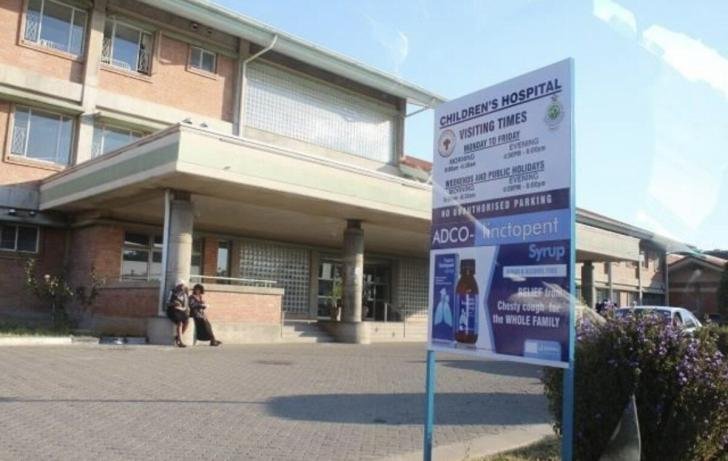
Two Zimbabwean families are reeling from shock after a private DNA test revealed a heart‑breaking truth: their daughters, now 18 years old, were switched at birth at Mpilo Central Hospital in Bulawayo on May 13, 2007. The revelation has reopened painful wounds and stirred fresh concerns over negligence and systemic failures at one of Zimbabwe’s largest referral hospitals.
The truth came to light when a man from Bulawayo began questioning why his youngest daughter bore no resemblance to him or her siblings. Troubled, he commissioned a private DNA test, which confirmed his fears — the girl he had raised since birth was not his biological child. The discovery sent shockwaves through his family, tearing apart his marriage. He accused his wife of infidelity, allegations she strongly denied.
A close family source told ZimLive that the distraught mother returned to Mpilo Hospital to investigate. She learned that only two girls had been born at the hospital on that day. Left with more questions than answers, she began her own search. Years later, in 2023, she located another mother through social media. The meeting between the two women was emotional — they shared their stories, compared their experiences, and arranged for DNA tests. The results were conclusive: their daughters had been swapped at birth.
“The hospital admitted negligence, saying the babies’ identification tags had probably fallen off and were replaced incorrectly,” the source said. “They explained that back in 2007 Zimbabwe was in a deep economic crisis, staff shortages were severe, and hospital systems had collapsed.”
Despite the gravity of the error, Mpilo Hospital’s leadership has offered little support. Dr. Narcisius Dzvanga, the hospital’s chief medical officer, told ZimLive he needed more time before responding in detail. The affected families say they have received no psychological or practical assistance to cope with the trauma of the discovery.
“The least they could have done was deploy psychologists to help us process this,” said a source close to the families. “Instead, we’ve been left to face this pain on our own.”





Mpilo Hospital Confirms 18-Year-Old Baby Swap Mistake
The tragedy deepened when the father of the girl raised in Shurugwi died before learning the truth about his daughter’s identity. The Bulawayo family has reportedly pledged financial support for both girls, though the mother from Shurugwi — now living in South Africa — is still deciding what steps to take next. Efforts are underway to bring the two young women together, but cultural and linguistic differences between the Shona‑ and Ndebele‑speaking households have complicated the process of building a bond.The families have engaged legal representation and are considering suing Mpilo Hospital for gross negligence.
This case comes just months after a similar scandal at the United Bulawayo Hospitals (UBH) in January, where a Cowdray Park mother who delivered a boy by Caesarean section was mistakenly given a girl. DNA tests later confirmed the swap. In that case, the Esigodini couple who had unknowingly taken the boy initially resisted cooperation until police intervened.
Legal experts point to a landmark 2014 decision by the North Gauteng High Court in South Africa, which ruled that two children swapped at birth should remain with the families who had raised them — placing emotional bonds above biological connections. The ruling has become an important reference point in cases of this nature, and observers say it could influence the outcome of the Mpilo case.
The revelations have cast a harsh spotlight on Mpilo Hospital, which is already grappling with a series of scandals that have eroded public confidence. Recent investigations have exposed widespread fraud in nursing recruitment, including the admission of students with forged O’ Level certificates. Several individuals — including Thelma Gurupira (23) of Mbare, Sandra Kudzaishe Ndege (25) of Murehwa, and Jonathan Mukwenha of Gokwe — have been arrested, with others still under investigation.
In another troubling case, Taurayi Prosper Vanhuvaone (29) posed as a doctor at Mpilo for several months, prescribing questionable treatments and defrauding patients before being caught.
The growing list of scandals has deepened public concern about safety and accountability in Zimbabwe’s public health system. For many, Mpilo remains a vital institution — often the only access point to healthcare — yet trust is now in crisis.
As the baby swap case unfolds, pressure is mounting on health authorities to act decisively. Advocacy groups are calling for a thorough investigation, full accountability, and reforms to prevent such tragic errors from recurring. At the heart of the matter is not just a question of medical negligence, but of trust, transparency, and justice for families who have endured unimaginable pain.
For the two families at the centre of this scandal, the road ahead is fraught with uncertainty. They face not only legal battles but the emotional challenge of reconciling identities, nurturing relationships, and coping with a truth that has reshaped their lives forever.
The case is now more than a story of a hospital error — it is a painful reminder of the fragility of trust in public institutions, and a call to strengthen systems that safeguard life and dignity.
Source- Bulawayo24